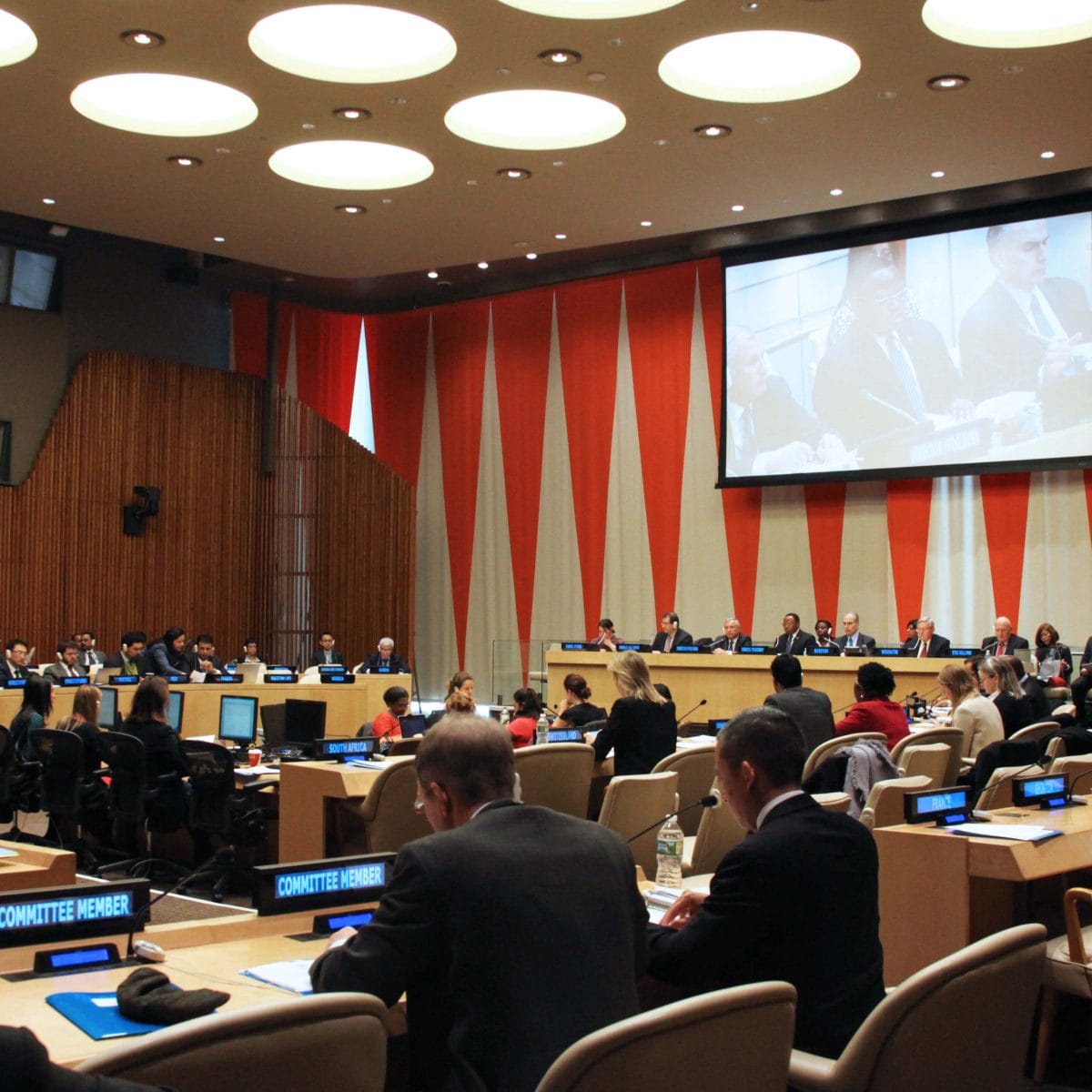
On April 10th, UN Watch broke the story that the UN’s 54-nation Economic and Social Council (ECOSOC) nominated the Islamic Republic of Iran to the UN’s Committee for Program and Coordination, which meets next month to shape policy on women’s rights, human rights, disarmament, and terrorism prevention.
UN Watch also called on all democratic ECOSOC member states — Canada, France, Spain, Norway, the Netherlands, Australia, the UK, Finland, Switzerland, Austria, and Finland — to explain why they refused to object to Iran’s nomination. During the meeting, the Chair repeatedly invited members to object, but the U.S. was the only country to do so.
After UN Watch exposed the silence from these democratic countries — which instantly went viral across social media and quickly racked up over 4 million views on X.com — some democracies attempted to escape criticism by suggesting that they never endorsed Iran for this UN committee.
Canada’s government responded that “Iran was nominated by the Asian group of which Canada is not a member” and that “there was no vote at the committee.” Finland’s Ministry for Foreign Affairs echoed this narrative and added that it “had no other options.” But as UN Watch Executive Director Hillel Neuer publicly refuted on X.com, Finland and the other democracies did have other options.
Refuting the Misinformation on the UN’s Nomination of Iran
• Although it is the Asia-Pacific regional group which put forward its list of candidates which included Iran, all 54 ECOSOC members — including Canada, France, Spain, Norway, the Netherlands, Australia, the UK, Finland, Switzerland, Austria, and Finland — joined the Council’s consensus to formally nominate Iran and all the others. It is misleading to deny participation in the process only because the nomination stemmed from another regional group.
• During the meeting, the United States took the floor to disassociate from the consensus nomination of Iran, stating that the regime threatens its neighbors, infringes on the Iranian people’s ability to exercise their basic human rights, and is thus unfit to serve. The Chair repeatedly invited other delegates to take the floor and make similar statements, but Canada, Finland, and the other democracies chose to remain silent. Instead, all Western states could have disassociated from the consensus — as the U.S. did.
• Although not members of Iran’s regional group, Western countries could have used diplomatic leverage to encourage the group to select another candidate — as democracies did it in 2010, getting East Timor to defeat Iran at UN Women. As reported, in this case, “the EU, Australia & Canada carried out an intensive diplomatic campaign to thwart Iran.”
• In response to their inaction, Finland’s claim that “it is important for us to support the entire UN system and… that we do not paralyze the activities of the entire UN” is disappointing. Protesting Iran just months after the regime slaughtered tens of thousands of their own civilians would not “paralyze” the UN, but instead help protect human rights.
I regret some democracies now suggest they never endorsed Iran for a UN committee that soon meets on women's rights.
I ask each foreign minister: Yes or no, did your government join ECOSOC's April 8 consensus nomination of the Islamic Republic of Iran?
🎥 https://t.co/Wa5kLLws6v— Hillel Neuer (@HillelNeuer) April 16, 2026