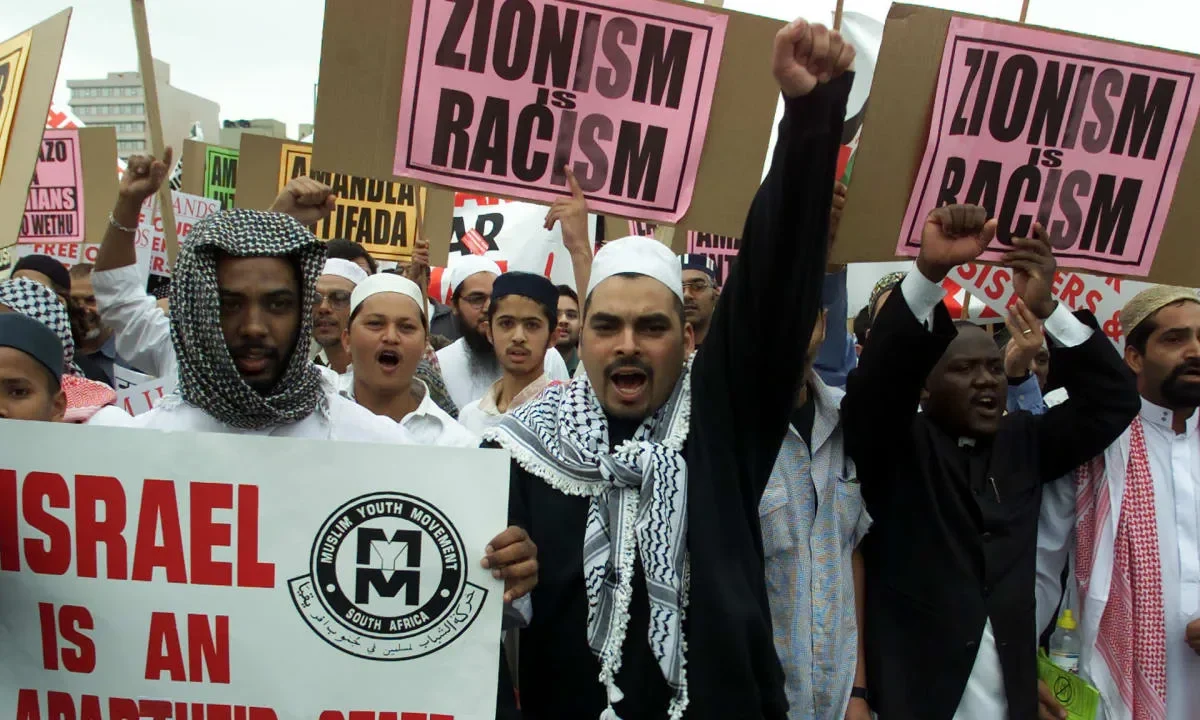
Ahead of the UN General Assembly’s planned “Durban 25” celebration on September 28, UN Watch and NGO Monitor hosted a special event to remember the notorious hatefest that was the 2001 UN World Conference Against Racism, in Durban, South Africa.
NGO Monitor President Prof. Gerald Steinberg addressed the 25-year history since the Durban conference.
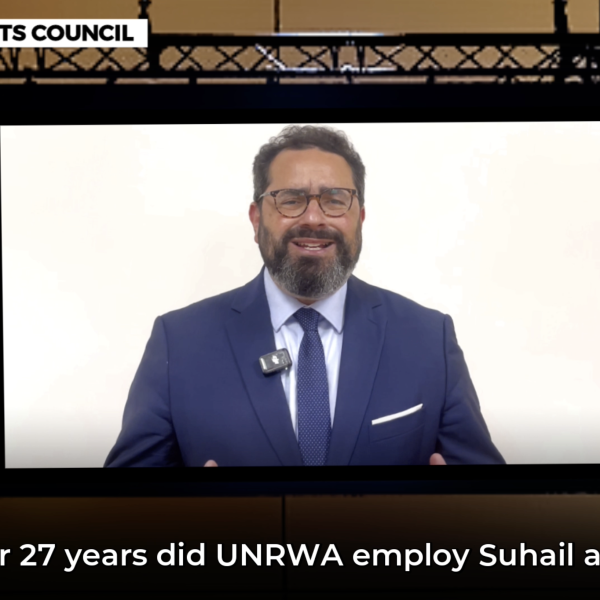
UN Watch Executive Director Hillel Neuer discussed the UN’s 1975 “Zionism is racism” resolution and the institutional launch of Israel’s demonization as a “racist” state.
David Harris, Executive Vice Chair of ISGAP and former Chair of UN Watch, detailed U.S. Secretary of State Colin Powell’s decision to withdraw the United States from the conference.
Prof. Dina Porat, chief historian at Yad Vashem, recounted the hostility faced by the Israeli delegation and the NGO Forum’s refusal to acknowledge antisemitism.
Prof. Irwin Cotler analyzed how Durban weaponized human rights language to launder institutional antisemitism under the protective cover of the UN.
Irwin Cotler: “This was going to be the first international human rights conference where anti-racism was going to be the theme. What happened at Durban was truly Orwellian. That was a tipping point for the laundering of antisemitism at the UN. What emerged from Durban was the metastasized, newly legalized antisemitism under the cover of the UN. This singling out of Israel has continued to metastasize since. Durban is the Mein Kampf of today.”
David Harris: “Whereas the 1975 effort on Resolution 3379 (“Zionism is Racism”) was a Soviet-Arab concoction, 2001 and thereafter was much more sophisticated: wrapping its agenda in a mantle of political progressivism, of the language of human right. The basic strategies and tactics employed then in Durban, and honed in the months leading up to Durban, continuing until today with the BDS movement.”
Dina Porat: “I was a member of the Israeli delegation to Durban. Instead of dealing with the burning problem of genuinely confronting racism, which was increasing in Europe after the waves of immigration, Israel and the Jewish people were put on the table. So I went up to the Belgian representative, who was chairing the sessions, and said: ‘Could you tell me what is going on? How did it, with a snap of a finger, turn against us?’
He took me aside, as though explaining something so obvious. He said: ‘Listen, most of the countries that have delegations representing them — from South America, Africa and the Far East, mainly those that were under colonial rule — see racism very differently. They don’t see the problems that we see in Europe today or in North America. They remember, and cannot forget, what happened during colonial times. And what they want to use the conference for is to obtain compensation for what they suffered under colonial rule.’
‘Just imagine,’ he told me, ‘what would happen if Spain had to compensate so many countries in South America, Portugal had to compensate Brazil, and we Belgians had to compensate the Congo. We all know what Belgium robbed from the Congo.’
‘So I tell you frankly: The simple solution to this problem was to pick on Israel and the Jews.’
He said it so simply and so openly that he left me speechless. That was a blunt and exact explanation of what happened at the Durban Conference.”