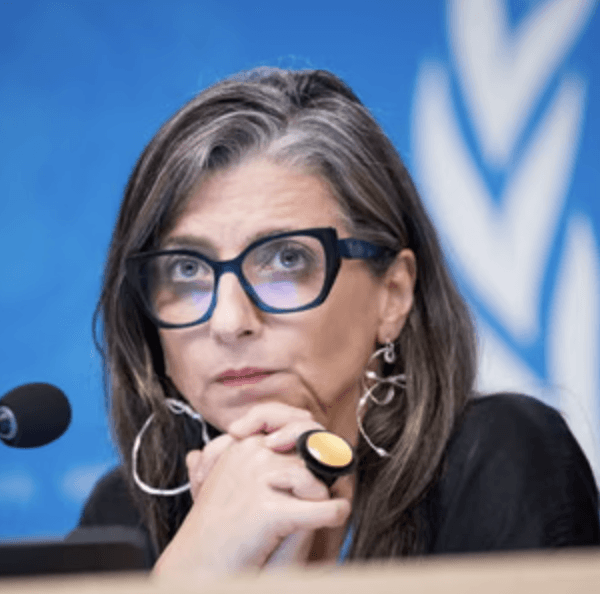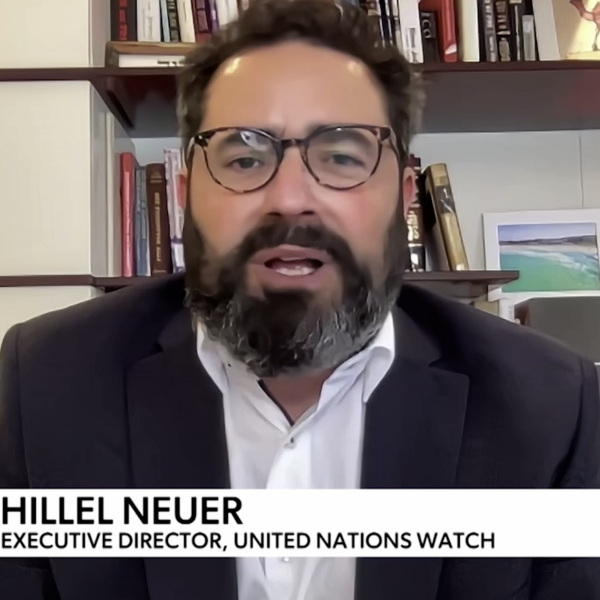
On October 8, 2026, Chris Sidoti, a member of the UN Commission of Inquiry on Israel, and Dr. Brian Cox, an international criminal law expert and former U.S. military lawyer, debated the Commission’s finding that Israel committed genocide in Gaza. The debate took place at Caulfield Synagogue in Melbourne, Australia. The full transcript is below.
Event introduction
Sharon Kuper: All right, thank you all for coming tonight. I’m sorry about the delay. We actually did have five rehearsals. I just want to actually acknowledge that everybody doing the AB are all volunteers, their community volunteers that have been doing this for decades unappreciated and unacknowledged. So, thank you. So, welcome everybody. I’m Sharon Kuper Holtz and even saying my name out loud is actually a revelation as so many generous will tell you I’ve refused to give my surname. I’ve even asked them to use they press me for a surname—I’d amaze them—which I haven’t used for like 36 years and then shorten it to Cooper half of the time. So, here we are.
I’ve come out of hiding. Didn’t want to draw attention to myself, but here I am. Thank you for joining us for this important world first debate on the accusation of genocide against Israel. We’ve all heard the allegations being screamed by clueless protesters desperate for a cause, but also repeated by global media, NGOs and governments. The evidence they cite is the United Nations Independent International Commission of Inquiry on the occupied Palestinian territory which concluded that Israeli authorities and security forces have committed and continue to commit genocide against Palestinians in the Gaza Strip. Genocide.
We are a very educated, generous, fair and experienced community. And unfortunately, our experience does involve genocide. Real genocide. Not the nearly defined label that a terror organization provides through smashing borders and kept training sadistic murderers, tortures, and hostage taking while the population celebrates. Not the sort of genocide that they could stop by disarming and surrendering the hostages. Not the sort of genocide where the population is warned of military targets by leaflets, SMS, online maps, and provided escape corridors.
Not the kind of genocide where more than one ton of aid per person is delivered to ensure nobody dies of starvation. Not the kind of genocide where children are vaccinated. Not the kind of genocide that boasts the lowest civilian to combatant fatality rate in the history of urban warfare. So, a few weeks ago, when Patty the Irishman realized my husband and I were Jewish while we chatted in a supermarket in Avenue, he got so emboldened by his moral superiority that he told me he was sorry Hitler didn’t finish the job.
And when I took out my phone and repeated what he said to me to provide him the opportunity to deny it, he doubled down and he said, “Bring back, Hitler.” And soon afterwards, he told me that he was going to put an effing bullet in my effing head. That level of self-righteous hatred and justification for violence and even murder lies in the mistaken belief that Jews and Israelis are all uniquely evil and that we have been found to be genocidal baby killers. My father survived the Holocaust, but his fathers, sisters, brothers, nieces, and nephews were taken to Auschwitz.
Today, 80 years later, our global Jewish population is still not recovered to pre genocide numbers. So, let us scrutinize that Commission of Inquiry report that makes such an egregious accusation and the evidence they used to justify. I ask that you recognize that it took a great deal of courage for Chris Sidoti to come here tonight to face us. He didn’t have to. He already commands the world stage through his role on the United Nations Commission of Inquiry on the occupied Palestinian territory. Global media chase him for his comments in quotes. He consults with NOS’s and governments.
So coming here and facing 350 hostile Zionists is no promotion for him. So I ask you tonight not to disrupt, not to jeer, you don’t have to agree, but we’ve all come here to listen and let us have a very meaningful conversation, exchange ideas and explore some very highly contentious issues and maybe, just maybe, it will be cathartic and satisfying for us all. Now, thank you all for being here. Here’s my husband, Mark, to tell you about the three panelists.
Panelist introductions
Mark Holtz: Thank you all. It’s always a very hard act to follow. I’d like to introduce the participants. So the debate can’t happen without Chris Sidoti who is a human rights lawyer and an advocate with over 50 years working in official institutions and non-government organizations at national and international levels. Since July 21, he’s been a commissioner on the United Nations Human Rights Council’s independent international Commission of Inquiry on the occupied Palestinian territory including East Jerusalem and Israel. And if we had another 3 hours, we’d discuss the word independent start.
He is also a member of the special advisory council for Myanmar and was a member of the United Nation human rights council independent international fact finding mission United Nations [Unintelligible] department on Myanmar 2017 to 2019. He currently works from Sydney, Australia. He’s been the Australian human rights commissioner and Australian law reform commissioner. Now the other panelist Dr. Brian Cox is a senior fellow at the McDonald Laurier Institute in Canada. He taught international law at Cornell Law School up until this year.
In 2018 he retired from the US military after 22 years of military service including seven of those as a military lawyer. His combat deployments include Iraq up until 2004 as a combat camera operator and Afghanistan in 13 and 14 as an operational law attorney in that field then as chief international and operational law for regional command east. He served as a military prosecutor, a federal prosecutor, a brigade judge advocate, administrative law attorney, legal assistance attorney, and a military magistrate while he was a judge advocate.
His military awards, decorations, and qualifications include a Ranger tag, which he’s wearing tonight, senior parachutters badge, bronze star medal, NATO medal, and basic and advanced collateral damage estimate certification. He holds a JSD degree from Cornell Law School, a master’s of journalism from Carlton University, and an LLM from Queens Law and undergraduate law degrees from the University of North Carolina. well, we’ll clap. That’s a very good I’m sorry, Chris, we didn’t clap after you because I don’t know. Okay. and okay and most importantly a mediator tonight is no slouch himself most yes as important Dr.
Glenn Colitz is an international lawyer, a defense analyst and an academic in law and security. He served in the ADF, the Australian Defense Force, including an operational and legal roles in East Timor and Afghanistan and with a special operations task group and as a military prosecutor. Most recently, he’s been investigating Russian practices in Ukraine. tonight. And this is important, he wears a kipah in special forces camouflage, which he and his colleagues wore at commemorations for the Jewish Australian commander, who I think was a Mount Scopus boy, Greg Sher, who was killed in action in Afghanistan.
Now I also want to say that the security you saw tonight was like immense. This event could not have happened without CSG and everyone at CSG, they are volunteers. They’re standing protecting our community because without them, we don’t have a community. And things like a metal detector, this is, you know, unusual. And I suppose Chris can see what it’s like for Jews living in Melbourne or Australia right now. So, thank you everyone. Look, I want to say something today. Brian choked up a bit when I’m joking. I’m down during our presentation today, Jack, because of him and his lost soldiers. Lost. Let’s keep that in both.
Glenn Colitz: Yeah, let’s keep these guys in. Okay. now for the moderator cracking the whip. As moderator tonight, I don’t propose to interject. It’ll be our learned speakers deserve to be deserve to be heard. Having said that, my questions are very clearly about the law and the facts. Now I like a good anecdote like anybody else. In fact, I told that to you last night over a few of Monakum Malcolm’s whiskeys and some of my jokes were true to me. but if we want anecdotes, we can go to the National Press Club. We’ll watch the ABC. Tonight is about facts and the law. Thanks. Yeah.
Well, on that note, I’ll hand over to our speakers for their opening addresses. We’ll start with you, Chris.
Opening Statements
Chris Sidoti: Thanks very much, Glenn. Shalom alechem, salam aleykum. Peace be with you. It is one of the things that keeps me going that the three peoples of the book have this longing for peace. They wish it to people within their own communities, but we need to wish it to each other as well. In coming tonight. thank you Sharon and Mark for your comments, but you know, I don’t feel particularly courageous. You know, we’re Australians. In coming tonight, I come in the hope that in some way this can contribute to peace for us individually, for our particular community, and for the broader community.
I know that this is promoted as a debate and I understand why, but I need to say that I haven’t come here for a debate. You know, a debate for me is a game. I did debating when I was at school, and that was a bloody long time ago. It’s a game. What we’re discussing tonight is not a game. It’s far too serious. and debate has winners and losers. There’s not going to be any winners and losers tonight. I’m I’m not going to convince a single person in this room and nor is Brian or any of you going to convince me. Why I came tonight is because I need to listen and others need to listen.
Not in an expectation that anybody is going to convince us of anything but that perhaps we will go away with at least some insight into the other perspectives, the other views. So for me tonight is not a debate. I’m going to be listening. I’ll be responding of course. I’ll explain why we have thought what we have thought and why I think what I think not just the anonymous we of a Commission of Inquiry but the I that is personal that’s what I’ve come for and I’m very happy to have this opportunity to do so and I hope that in some way our gathering tonight contributes to peace
Brian Cox: Thank you, Glenn. And thank you, Chris. And especially thank you for joining us today. Today, October 8, 2026, just yesterday, we commemorate the third anniversary of the October 7 terrorist attacks. And during remarks today earlier in the day at AJAC headquarters here in Melbourne, I observed that October 7 is one of those rare days in history where there’s a before this one day and a world after this one day. It joins September 11th, the attack on Pearl Harbor as just examples that come to mind of one specific day, specific activities on that day where there’s a very distinguishable world that exists before that day and after that day.
And we carry the pain and the loss of October 7th every day, but especially on the anniversary, yesterday was the third anniversary. One of the things that stands out to me, one of the reasons there is a world before the October 7th terrorist attacks and the world after is that the sentiment that is now so popular, the anti-Western, anti-Zionist, anti-Israel, and even anti-Jewish sentiment that has become so prevalent and such a feature of our everyday lives on that day and shortly thereafter transitioned from being fringe and marginal to mainstream and a part of our everyday existence and it started on October 7th.
And it’s useful to keep that framing in mind because one of the primary tools that has been used to justify the rampant anti-Israel, anti-Zionist and anti-Jewish sentiment and indeed anti-western sentiment since then is international law. That’s my focus. That’s my specialty as Mark indicated with the overview of my background. I and Glenn the moderator, we’ve spent an entire career practicing this law, this body of law, international law, especially the law involving armed conflict, either as combat soldiers or as military members or as legal advisers.
My background is fairly unique as far as I can tell in terms of engaging in public discourse. I see international law as it exists in doctrine as I spent 15 years as a combat soldier applying before I became a military lawyer and spent seven years advising on. And then as I retired in 2018 after 22 years of service, I’ve spent my career now, my third career, first combat soldier, then military lawyer, and now international law professor, bringing to the public forum my perspective as a longtime practitioner on international law involving armed conflict.
I appreciate that Chris has agreed, as Sharon suggested, has agreed to come here for this debate or for this conversation. Whether it’s framed as a debate or a conversation, as Chris said, and I agree, it’s an opportunity to listen. This crowd, I am certain, will not be disruptive. It will not be disrespectful. Even if every person in this room, I’m not sure that’s the case, but even if every person in this room disagrees with every word Chris says, this room has been the people who are here for this conversation will not be disruptive because we do want to listen.
What I bring to the conversation is a different perspective and a different approach than Chris has. But what I will bring is an explanation for why I believe there are inherent and systemic deficiencies in the UN Commission of Inquiry’s work. And this UN Commission of Inquiries work is relied on by the media generally, by governments, by courts, by administrative review tribunals as evidence that Israel is committing genocide in Gaza among other violations of international law.
I disagree and I bring to this conversation or debate, however it’s framed, 22 years of experience applying this law and practice and that is the perspective that I bring to this conversation here and to my public engagements and discourse beyond this room. Thanks.
Debate
Glenn Colitz: I’m going to start with the questions now and I’m going to pose the questions to Chris and then invite Brian to respond. So the first question is the commission reports conclude that Israel has committed four of the five acts listed in the genocide convention. Can you explain what factors you relied on to establish genocidal intent since this is the most challenging aspect of the genocide inquiry?
Chris Sidoti: Thanks Glenn. I need to split up your question in parts because genocidal act is not the same as genocidal purpose and the evidence for some is different from the evidence for others.
The genocide convention has like most criminal laws two components to the definition of genocide. The first is the act part and the second is the intent part. That’s no different to what we find in our criminal law in this country and most criminal laws. The convention defines five categories of genocidal act. Of those five categories, our commission, as Glenn has indicated, found that four categories of act had occurred during the course of the war in Gaza since 7 October 2023. The fifth category had not.
The fifth category is the removal of children from one group and placing them with another group defined by racial, religious, ethnic, national terms. Just by way of an aside, my practical introduction to the law of genocide covered that fifth genocidal act.
I was a commissioner at the Australian Human Rights Commission on the inquiry into the separation of indigenous children from their families. In the 1990s and on the basis of that category alone, the removal of children, the placement with another racial ethnic group, we found then that the policies of separation of indigenous children in this country constituted genocide. That category was not present in Gaza but the other four categories were. The question of intent is different and it is particularly different when we come to the crime of genocide. There are two elements to intent for genocide.
The first is an intent to do the acts themselves. But the second is what is called genocidal purpose. The acts must be carried out with the purpose of destroying a defined group in whole or in part. Both of those aspects are important, in whole or in part. The definition does not require a purpose to destroy a particular group in its totality, but the part is sufficient but is not very clear as to how that is actually defined or applied in practice. So that’s the law that we were dealing with so far as the four categories of act are concerned. We drew on all of the various types of evidence that are available.
We drew on eyewitness evidence. Those eyewitnesses could have been in some respects victims who survive. They can be medical doctors, nursing staff who were present. They can be international humanitarian workers who were present. So anyone who is capable of being able to describe on the basis of what they saw what had happened.
We also had access to an enormous volume of digital evidence and this is very different from other conflicts. The volume of digital evidence that is available. Both Israeli soldiers and the Hamas and Palestinian Islamic Jihad combatants seem to have obsessions with photographing or videoing or audio recording themselves doing acts and posting them online. We have over 17,000 pieces of digital evidence. We have to verify it and we only accept that evidence that is verified. Some of the evidence is very easily disposed of.
There were some early videos for example that were posted online. When we did the analysis of them, we found that they were in fact videos of events that took place in northern Iraq in about 2017. And so of course that was discarded, but we have a lot of that digital evidence. We have satellite photographic material. We do not come to conclusions unless we ourselves have conducted an investigation. We do not rely on media reports and we do not rely on information that is given to us unless the information can be categorized as firsthand information that is primary evidence or is digital evidence that we ourselves can confirm.
We, in fact, I should indicate came very late to the conclusion in our genocide report and that’s because we had to conduct the investigations ourselves. You know it was September last year a little over a year ago now that we produced that report almost 2 years after this current escalation of fighting occurred. So it was not something that we rushed into. We were not prepared to make any comments about the issue of genocide and didn’t until such time as we were satisfied that our own investigations were sufficient to form conclusions. I’m sorry I’m longwinded but you asked a long question Glenn.
The last thing I will go to is the question of genocidal purpose because that’s the most significant issue and that is the most difficult issue. You know, there have only been two cases of state responsibility for genocide that have gone before the International Court of Justice. You know, two cases in almost 80 years. And so this is not something that is well developed in case law and the law in fact is in many respects still evolving. But one of the reasons why there have only been two cases is because of the difficulty of establishing genocidal purpose.
Now I talked a minute ago about the work I had done on the separation of indigenous children. In that case it was pretty easy in the end because we had all of these official statements of policy coming out of federal and state governments in this country during the 1930s and the 1940s. In the end it did not prove to be particularly difficult. But normally there is no smoking gun. There is no policy statement that you can rely on. There are often indicators.
But genocidal purpose can be established not just by the smoking gun, the direct conclusive evidence such as we found on the removal of children. It can also be established by what in our legal system we call circumstantial evidence. In the international system it’s generally referred to as inference, but it’s pretty much the same as circumstantial evidence. Inference and the test of inference is a very high test. According to the International Court of Justice, to form a conclusion that the purpose is genocidal on the basis of inference requires that inference be the only reasonable inference available.
That’s a really high test. It’s a test in fact that in my opinion is higher than the criminal standard of beyond reasonable doubt. You know you can say you can have four or five possible inferences that you can draw from circumstantial evidence and you can conclude I have no doubt that this is the inference that we must draw. But in the case of genocidal purpose, it has to be the only reasonable inference, not just the one that we have no reasonable doubt about. And so it’s a very high test. And that also was one of the reasons why it took us so long to come to the conclusion.
Now I can go later into some of the factors that we took into account specifically, but the question Glenn asked was a general one about our approach. And so I wanted to give you the detail of our approach. I should make the last comment. One of the difficulties that we face is that the Israeli authorities do not cooperate with our commission in any way. That’s not unusual. Russia doesn’t cooperate with the Commission of Inquiry on Ukraine. Belarus doesn’t cooperate with the Commission of Inquiry on Belarus. Myanmar didn’t cooperate with the Commission of Inquiry I was a member of dealing with Myanmar.
It’s standard practice. so it’s not unusual, but it does make the job more difficult and it pushes us back to relying more on inference than on other factors when you can’t get access to the information in the hands of the state that we’re investigating. One of the bit of ironies I think is that the State of Israel not cooperating with our work and all these other states as well, Russia and Belarus and Myanmar and the rest. It means that the commissions of investigation are hampered to the extent of getting all the detail that the state under investigation has. And that’s where there is a restriction in what we’re able to do.
So we have to rely much more on inference under those circumstances.
Brian Cox: Well, I agree with Chris that the most difficult aspect of establishing genocide is genocidal intent. And I agree that it must be the only reasonable inference. I disagree that the commission has met its burden for establishing genocidal intent and certainly that it’s the only reasonable inference. And if we read from the Genocide Convention, as Chris paraphrased, Article Two establishes that it’s any genocide is the act of committing any of the five enumerated acts with intent to destroy in whole or in part a national ethnical racial or religious group.
So assuming Palestinians apply if actually exists as one of those four groups the intent, the only reasonable inference, would have to be the intent to destroy the Palestinians in whole or in part as such. The intent to destroy Hamas or to end the enduring security threat posed by Hamas is not genocide, it’s war. Now, if we refer to the Commission of Inquiry’s conference room paper report from September 2025, it’s the first time, as far as I’m aware, in a major report that the commission purported to establish genocidal intent.
And we have in this report, in paragraph 167, the report says that they relied on several statements by Israeli officials that advocated for collective punishment against the Palestinian people as a whole or the population of Gaza in particular. Some statements recognized that there was a difference between civilians and combatants, but urged that all Gazans should be punished for the actions of the militants on 7 October 2023. That’s what the commission says in its report in September 2025.
And then it draws on a series of statements made by Israeli officials, government officials purportedly to establish that the intent is to destroy the Palestinian population in whole or in part as such. For example, we’ll come back to that one. There was a statement from Defense Minister Gallant who said that we are fighting human animals and this was very soon after the October 7th attacks. This is purportedly so Yoav Gallant on 9 October 2023 said that we are fighting human animals. It’s clear from the context of Gallant’s statements that what he meant on October 9th, 2023 is that Hamas, who Israel is fighting, are human animals.
And after looking at the brutality, the intentional deliberate brutality of the atrocities committed on October 7th, he can be forgiven, I would suggest, for suggesting or describing Hamas as human animals. But it’s clear from the context of his statements that he did not mean the Palestinian population in whole or in part as such.
We also have a statement in paragraph 172 from Prime Minister Netanyahu made on 3rd October 2023 who says remember what Amalek did to you. And the commission, the report goes on to say, the commission notes that invoking Amalek in his speech, Netanyahu strengthened the idea that Israel’s war in Gaza is akin to the holy war of total annihilation commanded against the Amalachites. Thank you.
If we go to that, if we go to that statement from Netanyahu that I have here in November 2023, he does say this is a letter from Prime Minister Netanyahu to our soldiers and commanders in the Swords of Iron. November 6, November 5th, 2023. He does say remember what Amalek did to you. In the line immediately above that, in the line immediately above that, he says, “The current fight against the murderers of Hamas is another chapter in the generations long story of our national resistance, resilience.” Apologies. One line later, he says, and this is a repeated theme that the commission ignores.
And I’ll refer to an even earlier statement from Netanyahu where he also mentioned, remember Amalek. He says in this statement, in the name of those who were injured and killed on October 7th, that’s paraphrasing. Here’s a quote. On their behalf, we have gone to war. The purpose, and this is important, the purpose of which is to destroy the brutal and murderous Hamas ISIS enemy, bring back our hostages, and restore the security to our country, our citizens, and our children. Right after he says, “remember Amalek.”
What shows up in the report is remember Amalek but not the actual purpose, stated purpose of the conflict: end this enduring security threat posed by Hamas and repatriate all hostages. He also said, Prime Minister Netanyahu on October 28th, 2023—his is just a about a week before the statement that is cited by the UN Commission of Inquiry—remember what Amalek did to you. We remember and we fight.
They could have drawn from this as well. What they skipped, also in this statement—this is the second stage of the war coming up, the ground invasion. The goals of which are clear: destroying Hamas’s military and governing capabilities and bringing the captives back home. This is also not in the Commission of Inquiry report. Two years later—one year ago yesterday— commemorating the second anniversary of October 7th, Prime Minister Netanyahu once again [said] we will continue to act to achieve all the aims of the war: return all the hostages, which has now been achieved, and destroy the Hamas regime, and ensure that Gaza no longer poses a threat to Israel.
What the commission has done—just like Amnesty International, just like Human Rights Watch, just like the International Association of Genocide Scholars, just like random genocide scholars that are that provide these opinions in public discourse—they’ve taken snippets of statements from elected officials to support the inference that the goal of the combat military operations is to destroy the Palestinian population in whole or in part as such, while ignoring the actual stated intent that has been consistent since the very beginning to repatriate all hostages, and to end the enduring security threat posed by Hamas. That is not genocide. That is war.
And if we stick to that same report, paragraph 176, after going through a laundry list of cherrypicked selected statements from Israeli government officials, we have the commission considers that these statements by Israeli officials are reasonably interpreted as statements expressing an intent to destroy the Palestinian group in Gaza and they have been acted on as such by Israeli security forces in the Gaza Strip. They are direct evidence of dolus specialis which is the genocidal intent that’s necessary.
But what they’ve done is ignore—you will not find anywhere in the commission’s report—the stated intent of repatriating all hostages and ending the security threat posed by Hamas because that is war and it doesn’t support the only reasonable inference of genocide.
Chris Sedoti: Can I just make a couple of comments? we don’t have a lot of time not wait to the end, because it’s directly related to what Brian has said. Just one correction first. Human Rights Watch has not made any comment about whether Gaza constitutes genocide or not. So you can name the rest, Brian, but you need to leave Human Rights Watch out. They haven’t done it. Thank you.
And correct. Yeah. No, it’s a very sensitive issue, that one. Just two comments only and I will be brief.
Firstly, we as Brian quoted look to the issue of the comments that were made by Israeli leaders in relation to the actions that took place as a result of those comments. We did not in our conclusions rely on those comments alone. We did in fact provide context for one of the most serious of Netanyahu’s comments and talked about how he qualified what he said later in the same statement. But it seemed to us that his qualification was not convincing, shall we say, in relation to the statement that preceded it because the actions of the Israeli military was very much in relation to the first one.
But I just want the main thing I want to do is raise a legal complication and that is that the courts have said that a genocidal purpose can exist at the same time as other motivation. They distinguish between purpose and motivation. Now it’s not clear what that distinction means. But one of the factors for us was that if we accept that the goal, the word goal doesn’t appear in the Genocide Convention. If we accept that the goal of the Israeli authorities in Gaza has been the destruction of Hamas, that does not preclude the possibility of genocide being the strategy by which that goal is going to be attained. And that is an issue.
The fighting, the strategy can be undertaken in such a way in our view of the law that it can coexist with a goal of eliminating Hamas and there were a number of factors which we can go into later that induced us to come to that conclusion. I can, I’m happy to deal with that but I just want to clarify that one point at the moment.
Glenn Colitz: Let’s move on to the second question. We don’t have a lot of time. So that, oh yeah, right. So thank you. So how do ICJ provisional measures factor into your assessment of whether Israel is responsible for genocide?
Chris Sidoti: In most respects they don’t. The provisional measures don’t relate to a finding of genocide. And there has been a lot of misstatement as to what the provisional measures actually said. Where the provisional measures were important though, I must say, is about other issues because the Israeli authorities have not complied with the provisional measures and they’re bound to do so under international law. But they have not.
But the provisional measures really don’t factor significantly into whether or not genocide has occurred. Where they are relevant, and I’ve said this repeatedly publicly, relates to the responsibilities of third states, including Australia, that the provisional measures at least raise the possibility in imposing them that there is a risk of genocide. They don’t address the question of whether there is genocide or not but they raise the question of a risk of genocide and that triggers the obligation to prevent under the genocide convention.
The genocide convention has three categories of crime: committing the genocide, preventing genocide, and inciting genocide. And these three things are not dependent on each other. And so the provisional measures are important as triggering an obligation to prevent, but they do not in my view, in the commission’s view, say anything about whether genocide has occurred or not. Not yet.
Brian Cox: Once again, I agree with Chris to a degree that the report, the Commission of Inquiry report finds that the provisional measures indicated by the International Court of Justice do—the report itself finds it—that they are evidence that there is a serious risk that genocide is being committed. And in fact, if I can refer back once again to the Commission of Inquiry conference room paper from September of 2025, it cites in paragraph 247, the report does a pretty long and extensive explanation, an excerpt of what the provisional the ICJ has indicated of provisional measures.
And then two paragraphs later in paragraph 249, the commission says that these provisional measures have put all states on notice of a serious risk that genocide was being or would be committed. As such, the duty to prevent genocide was triggered due to the actual or constructive knowledge and this is important, as we’ll come back to this actual or constructive knowledge of the immediate plausibility that genocide was being or was about to be committed. Now, this is an understanding or an interpretation of ICJ provisional measures that is not uncommon in public discourse.
I wasn’t surprised to find it in the Commission of Inquiry’s work because it is so common, but it is as false as it is common. And that’s because ICJ provisional measures do not simply do not indicate that there is a plausible risk of genocide. And I will explain why, but you don’t have to just take it from me. We can also hear it from an interview, an excerpt of an interview from the, who was at the time, that the initial provisional measures were indicated. Joan Donoghue was the president of the International Court of Justice and she explained in an interview for BBC HARDTalk why it is that the understanding that provisional measures published by the ICJ do not relate to a plausible risk of genocide. So we’ll hear from Joan Donoghue and then I’ll expand further on her comments.
BBC Host: Please, would it be fair to say, and I’m no lawyer, and many people watching and listening will not be lawyers, but would it be fair to say that the key point that you made your initial order and ruling upon was whether or not there was a plausible case that should be taken on by the court of genocide in the case of Israel’s actions in Gaza after October 7. And you quite clearly decided that there was a plausible case. Is it right to say that’s at the heart of what you decided?
Joan Donoghue: You know, I’m glad I have a chance to address that because the court’s test for deciding whether to impose measures uses the idea of plausibility, but the test is the plausibility of the rights that are asserted by the applicant in this case South Africa. So the court decided that the Palestinians had a plausible right to be protected from genocide and that South Africa had the right to present that claim in the court. It then looked at the facts as well, but it did not decide and this is something where I’m correcting what’s often said in the media. It didn’t decide that the claim of genocide was plausible. It did emphasize in the order that there was a risk of irreparable harm to the Palestinian right to be protected from genocide. But it the shorthand that often appears which is that there’s a plausible case of genocide isn’t what the court decided.
Brian Cox: Joan explains that it hinges, the provisional measures hinge on rights and not and therefore you can’t discern from provisional measures that there is a plausible risk of genocide. What she doesn’t explain is why that is. And so I’m going to explain why it is, very briefly.
If we refer to Article 41 of the ICJ of the International Court of Justice Statute Article 41, the court shall have the power to indicate if it considers that circumstances so require any provisional measures which ought to be taken to preserve the respective rights of either party, to preserve the respective rights. Now, if we go back to the Genocide Convention, back to the intent element, genocide means any of the following acts committed with intent to destroy in whole or in part a national, ethnical, racial, or religious group as such. There’s nothing in here about rights.
And there’s nothing in here, Article 41 of the ICJ statute about genocidal intent. And so when the court indicated provisional measures, it didn’t have to address genocidal intent at all. Not at all. There was not, there’s not a single portion of provisional measures that reaches intent because intent is on the merits. And provisional measures are based on rights. So they never once have to consider whether it’s plausible that genocide is being committed. Just whether rights can be protected by indicating provisional measures.
If we go back to the way that this is treated within the UN Commission of Inquiry once again as such the duty to prevent genocide was triggered due to the actual or constructive knowledge of the immediate plausibility that genocide was being or was about to be committed. That is not what the ICJ provisional measures suggested or indicated. You don’t have to take my word for it. You can take Joan Donoghue’s word for it. And you can take the word of the ICJ Statute, Article 41, where it says that rights to be rights can be protected by indicating provisional measures and that it has nothing to do with establishing genocidal intent.
Chris Sedoti: And my view is that our paragraph is entirely consistent with then President Donoghue’s comments.
Brian Cox: Okay. Good.
Glenn Colitz: Question three. I’m just noting the time. All right. what sources did the commission consult to develop the standards for war crimes such as distinction, proportionality, and feasible precautions in the attack as well as for crimes against humanity and genocide?
Chris Sidoti: The international law is very clear on these issues and you know, I think that Brian and I are completely at one in describing what the law is. So what sources did we consult? We consulted the standard international law sources as laid out in the Statute of the International Court of Justice and other international documents.
The treaties, the jurisprudence, customary international law. Those principles of distinction, proportionality, necessity and so forth are well established in the law. I think that the issue in discussion tonight, the disagreement between Brian and me is not about what the law says, it’s about how the commission is applying it.
Brian Cox: I like saying this because it’s true and I really appreciate the respectful conversation that we’re having. I agree with Chris to a degree. So, and Chris mentioned distinction, proportionality, feasible precautions in the attack. For many people, these are words.
For someone like me who spent 22 years in military service, it’s more than words. It’s doctrine. And you can’t just put a word on a page and then say that is the rule. The rule has context and it has substance. And what I find as I read the UN Commission of Inquiry’s work is that it fails to articulate an identifiable formulation of specific rules of the law of armed conflict. And the reason that’s important is because if you don’t draw on the actual rules, then you can make up the content and then you can make up the allegation that it’s been violated. That’s my anecdotal approach. But here is the empirical approach.
Going to the conference room paper that was most recently published from the Commission of Inquiry in June 2026. I’m just going to read a couple of excerpts for where the commission describes these very important and very doctrinal and very central rules of the law of armed conflict that Chris mentioned. Paragraph 180.
The commission has found in its previous report, and it cites to the report from September 2025 that I just referred to, that the Israeli security forces burnt or demolished schools as listed in below in this paragraph, many of which were at the time were empty at the time that such destruction was deliberate and unnecessary and constituted and here we violation of the principles of necessity, distinction, precaution, and proportionality under international humanitarian law. So there’s just a naming of these rules, but without an articulation or formulation of what the rules are.
If we go later to paragraph 284, the commission finds that Israeli security forces intended to target the building in question even though they knew or ought to have known that children were present, violating the principles of distinction, proportionality, and precautions. And then on the next page, paragraph 298, there’s a violation of the rules of distinction, proportionality in relation to pediatric and neonatal facilities. So they’re words, violation of the distinction rule, violation of the proportionality rule, but no context for what the rules are.
If we were to refer to an information paper that was published by the Israel Ministry of Foreign Affairs very early after October 7th. It was updated, I forget when it was initially published, but it was updated November 2nd, 2023. We find in here articulations of what the rules actually are. Distinction rule. The IDF only targets, that means direct an attack, against persons who are members of organized armed groups or civilians directly participating in hostilities and objects that qualify as military objectives for proportionality.
And this is very similar to the rule that’s found in a treaty that Israel has not ratified but is a matter of customary international law. The proportionality rule. It has not ratified additional protocol one of the 1949 Geneva conventions but this rule is found there. And this is again still from the Israel Ministry of Foreign Affairs information paper. According to the proportionality rule, it is prohibited to carry out an attack when the expected incidental loss of civilian life, injury to civilians or damage to civilian objects will be excessive in relation to the concrete and direct military advantage anticipated.
Now, I should have emphasized the expected incidental loss and the military the concrete and direct military advantage anticipated because the only way you can assess what the expected incidental loss was and what the concrete and direct military advantage anticipated was is to hear from or have direct evidence or at least some conclusive evidence of what the knowledge and intent of the personnel responsible for the attack was at the time. Now that’s how we apply it in doctrine and in practice. And although Israel has not ratified the Rome Statute, apologies, having technical difficulties here with the lapel mic.
Israel has not ratified the Rome Statute of the International Criminal Court, but its military operations and its military doctrine are substantially similar to the rules, the war crimes that are found in the Rome Statute. Here’s one articulation that’s relevant—of the distinction rule. Intentionally, I’m going to emphasize the word intentionally. We’ll come back to that. Intentionally directing attacks against the civilian population as such or intentionally directing attacks against civilian objects, that is objects that are not military objectives. for the pro for the proportionality rule.
Intentionally launching an attack in the knowledge that such attack will cause incidental loss… which would be clearly excessive in relation to the concrete and direct military advantage anticipated. The reason I found it fitting to read from a doctrinal source from Israel, the Israel Ministry of Foreign Affairs, their information paper, and from the Rome Statute, is because these rules have content. And if you don’t include the content, then you’ve lost all context for whether these rules have been complied with if you’d name them.
The commission finds that the Israel security forces intended to target the building even though they knew or ought to have known that children were present, violating the principles of distinction, proportionality, and precautions. Without articulating what the rule is by extracting the context and the content, then it’s easy to reach that conclusion. That might be how a Commission of Inquiry assesses whether law of armed conflict has been complied with. That might be how NGOs like Amnesty International, Human Rights Watch, etc. assess the same.
That’s not how we assess it in practice and that’s not how the Israel Defense Force assesses it in practice. We actually apply the rules. And that starts by formulating and articulating the rules, applying the facts to the actual doctrine and reaching conclusions. If you don’t do that, you’re not actually assessing where the law of armed conflict is complied with. You’re just blowing smoke.
Glenn Colitz: Next question is, can you explain the connection between the use of explosive weapons in populated areas by Israel and the finding that Israel has committed genocide?
Chris Sidoti: That’s a detailed question that I think is at the heart of it, Glenn, and it goes to the issue that I raised a few minutes ago about the strategy that was employed. And this is where these principles of necessity, distinction, proportionality and precaution are most relevant. Because the strategy employed by the Israeli military in Gaza has been a strategy of total destruction. That is just clear from the extent of the destruction that has occurred. And this is precisely the issue about the connection with the question of genocidal purpose. It is a strategy of total destruction.
Now it may be that it is being done with the goal of destroying Hamas and Palestinian Islamic Jihad, but the strategy has been from the beginning a strategy of total destruction. So something like 85% of the housing stock of Gaza has been destroyed. More than 90% of schools have been either totally destroyed or require substantial reconstruction to be usable. Hospitals in their entirety have been destroyed and most hospitals now are either operating on a partial basis in rubble or under canvas field hospitals.
This is what the strategy has been. Now, I don’t like making comparisons and I don’t make comparisons with one exception. It’s been mentioned already that I was a commissioner on the Commission of Inquiry. It’s called a fact finding mission, but a Commission of Inquiry on Myanmar. And one of the areas that we considered there was the expulsion or the operation against the Rohingya people in 2017-2018.
And we had to again address the question of genocide in that context. The Rohingya people fled, had the capacity to flee from Myanmar and in excess of 1 million of them did. Probably around about 7 or 800,000 Rohingya fled from Myanmar between August 2017 and the beginning of 2018. They were able to cross the border into Bangladesh and get themselves out of harm’s way. When Russia invaded Ukraine, millions of Ukrainians, I think it was 8 million, crossed the border into Poland and moved elsewhere into Western Europe.
With the fighting going on in Sudan between the Sudanese armed forces and the Rapid Response Army, people have been fleeing into Chad and into other neighboring states, including Egypt. The situation in Gaza is different from all of those situations because the people had nowhere to go. That the fact that Egypt is refusing to admit them is, it is no more relevant than the fact, in fact less relevant than the fact that Israel is refusing to admit them. They had, they were prevented from going into Egypt and they were prevented from going into Israel.
And so unlike the Rohingya and the Ukrainians and the Sudanese and the Syrians who fled in their millions into Turkey, they had nowhere to go. Australia. [Audience member shouts asking if they should be admitted into Australia]. Yeah, we should. And that means that in a policy, a strategy of total destruction, 2.1 million people had no option but to move around within a very small territory. At this stage, at this stage now, those 2.1 million people are squeezed into a territory that is three times the local government area of the city of Melbourne. Three. Three times. 2.1 million people.
That’s the only possibility that they have at the moment in this period of an alleged ceasefire to escape from military force and even then that they are still being killed on a daily basis. So one of the relevant factors in response to your question, one of the significantly relevant factors is the inability of the people to escape from a military strategy of total destruction. And that is directly connected with the issue of genocidal purpose.
Brian Cox: Thank you, Chris. Might I just please ask from the crowd, I appreciate how passionate everyone is. I am as well and I know Chris is as well. Please let’s maintain decorum.
Even if we disagree with what either Chris or with what I’m saying, please maintain decorum and allow him to speak. Please don’t interrupt. Please don’t Yeah. Yeah. Heckle. Thank you. from the crowd. It’s, this is an important conversation and we can’t hear from Chris and we’re not able to hear from me on the other side. if we are not open to dialogue. So please be respectful.
Thank you. The issue, I agree with Chris the in part, no I typically also avoid comparisons and while I recognize Chris’s comparison between Gaza and Myanmar what I’d like to focus on is the way that the report engages with the use by Israel of explosive weapons because in many ways, and this is something that certainly anyone who’s been in the military understands, has been into combat understands. It’s it’s almost cliche. We say it so often, but it’s so often necessary to say it. The enemy gets a vote. The enemy gets a vote. In many ways, Hamas dictates how Israel must engage in hostilities against it as an insurgent group.
One moment, please. Thank you. And Chris is right that it is extremely populated, an extremely densely populated area in Gaza where the conduct, the hostilities is being carried on even despite the ceasefire to a lesser degree but still the hostilities still exist. But the way that Israel is required to fight against Israel’s required to fight against Hamas is largely dictated via Hamas. If Israel is intent on ending the enduring security threat posed by Hamas, it’s going to do so through peace, diplomacy, and negotiations? Well, we tried. Israel tried that for a long time and they got October 7th.
And so now Hamas could at any time stop the conflict by agreeing to surrender and lay down its arms and end its own security threat posed by itself to Israel. It hasn’t done that. It hasn’t done that. And so it dictates that Israel must, if it’s intent on ending the security threat posed by Hamas, it must use weapons to do that.
And because of the way that Hamas fights underground, hidden deliberately hidden among the civilian population, it would be fantastic if we could just magic the enemy to death or we could wish that they were no longer security whether dead, injured, captured, whatever, out of the fight due to sickness, illness, injury, death or illness. But we can’t. As technologically advanced as Israel’s military is among other militaries, we still require bullets and bombs to destroy the adversary.
And if the adversary hides and fights among the civilian population, those bullets and bombs will be directed against the adversary that it is among the civilian population. That’s a choice from Hamas. and not from Israel because the enemy gets ready. Now, the way that the commission engages with the use of explosive weapons in populated areas. Going to turn the report right side up. This is the June 2025 conference room paper, paragraph 31.
Israeli military operations in Gaza have been marked by the extensive use of explosive weapons and heavy munitions with a wide area destructive capacity in residential areas resulting in complete destruction of residential neighborhoods as Chris suggested. I agree it has but that’s not an indication of genocide. It’s not an indication of war crimes. It’s an indication of fighting in the way that the enemy votes.
Now, what this passage from the commission’s report implicates is a political decor a political declaration that was adopted in 2022 by many countries including the United States but not Israel on explosive weapons in populated areas. Now it’s, the thing to focus on is: one, it’s a political declaration. So as a political declaration it’s not legally binding. It’s just a political declaration right? It’s not a treaty among nations. It’s a declaration.
Section two and the reason is because the United States signed it against, well United States signed it. Section two of this political declaration says we reaffirm this is, the states that have signed it. We reaffirm our obligations under international law. Section 2.5
This is the important part of the EWIPA. So the Explosive Weapons in Populated Areas goes by the acronym very often as EWIPA. While there is no general prohibition against the use of explosive weapons I’m going to say that part again. While there is no general prohibition against the use of explosive weapons, any use of explosive weapons must comply with international humanitarian law. So one of the things about this political declaration is it doesn’t say anything at all. It just says there is no prohibition. Just apply international law. That’s it. That’s what Israel is doing.
There’s been a concerted movement among the humanitarian activist space led by ICRC international community—Red Cross—to severely restrict the use of explosive weapons in populated areas. And as much as they, as much advocacy that’s gone into it, all they’ve managed is a political declaration and not a treaty. Because the enemy gets a vote. Because countries are not going to agree to refrain from using explosive weapons in populated areas because they might have to fight against an enemy that operates in populated areas. And so by pointing to the use by Israel of explosive weapons in populated areas, all we’re doing is we’re referring to the conduct of hostilities that still has to comply with international law. Period. The use of explosive weapons in populated areas is no indication whatsoever of compliance or failure to comply with international law.
Now I’ll say one more thing on explosive weapons in populated areas. What the commission fails to do, just like many NGOs who also operate in this space fail to do, is they fail to acknowledge and account for mitigation techniques that can be utilized by militaries that do use explosive weapons in populated areas. When Mark read my brief bio before, one of the things he mentioned is that I was (I was in the military at the time), I was a certified and qualified collateral damage estimation methodology specialist. Because I was qualified to specialize in collateral damage estimation methodology, I understand how weapons are actually used and more importantly how mitigation techniques can be used.
It is not uncommon for Israel, the United States, or other countries to use high yield explosive weapons in populated areas. But what we do very often is we’ll mitigate by what we refer to colloquially as, we bury the bomb or delay the fuse. When we delay the fuse, the munition goes into the ground, there’s a fuse, so it makes contact with the ground, gravity carries the munition further into the ground and then it explodes into the ground into the vehicle into the structure whatever it hits. So it’s on a delay fuse, it makes contact, gravity pulls it down and then it explodes. What that does is the ground, the vehicle, the structure that the munition goes into absorbs most of the blast and fragmentation that munition projects. This is a mitigation technique and it’s very clear especially for someone who has been through CDE methodology certification and qualification. Used to do this in combat.
It’s very clear from looking at visual evidence that a bomb utilized or munition utilizes a delayed hit [unclear]. The way you can tell is there’s typically a very steep wall and the crater is compact so it doesn’t expand, it’s not like a bowl, it’s more like a cliff all around. That indicates that the munition went into the ground, blew up and launched the blast and fragmentation and ejecta up rather than out. The reason that’s important is, I know this, anyone who is familiar with cloud damage estimation methodology knows this, and when I see media coverage of attacks that are attributed to Israel and Gaza, it’s almost always the case that the visual telltale signs are there that mitigation techniques were used that the they buried the bomb.
And very often it’s the case that they’re I mean they’re using a 2,000lb bomb cuz that’s the highest yield that we have for conventional weapons typically, and they’re trying to get to a bunker typically, or a tunnel underneath the ground. They delay the fuse and it does two things. It directs the effects of ammunition against the target, but more importantly for our purposes, it mitigates the risk of harm to civilians. I see that in almost every single photo or video that comes out of Gaza. And if you know what you’re looking for, you’ll see it, too. That’s not accounted for in the commission’s treatment of Israel’s use of explosive weapons in populated areas. It’s used as evidence that Israel intends mass destruction of the Gazan or the Palestinian population. When in actuality it’s evidence that Israel is attempting to mitigate harm to civilians, and that is further evidence that the intent is not to destroy the Palestinian population in whole or in part, but to destroy Hamas. [Applause]
Chris Sidoti: I don’t know whether we’re looking at the same photos or not, but we did find instances of precisely the kind of situation that Brian describes, but we also found an enormous quantity of digital material—that is videos and photos that do not show the kind of use of explosive weapons for bunker busting, I think is the common phrase, but rather for total destruction of the the surface buildings and over a wide area. So we may be looking at different photos, we may not. I just don’t know. Can I ask you a question though, Brian what do you say about double tap bombing? because we found enormous eyewitness accounts and video evidence of double taps.
Brian Cox: I say that’s anecdotal. So it’s not uncommon. What we refer to in targeting parlance is achieving the commander’s intent. And if we assess that the commander’s intent was not achieved on the initial strike, we strike again until the commander’s intent has been achieved. What is often referred to in the media and in human rights organizations and activists rhetoric is that it’s a double tap. Well, they don’t know what the commander’s intent was to begin with. And so if there was a double tap then I mean maybe it was “I meant to kill a civilian and I didn’t and so I tried again and killed him the second time”—I guess. But it just as easily could be, and is in my case more likely, in my perspective more likely, that I assessed that my target was a military objective whatever it was and my commander’s intent was not achieved initially. So I conducted battle damage assessment and I authorized a reattack or a reattack or a triple strike or a quadruple strike until the commander’s intent has been achieved, and typically that is the elimination of that target.
Chris Sidoti: Your answer gives rise to I think a much broader difference between the two of us which I think is fundamental to the way in which we write our reports and and the way in which you critique them, and that is the very question of not just commander intent, but intent. In what you’ve written in critiquing the reports and what you’ve said today, quite clearly and rightly you place a very strong emphasis on intent, but there is an implication to me that it is impossible to determine intent without asking the commander or the soldier what was your intent. And that’s something that I just don’t accept if my interpretation is right.
Our police forces every single day and our courts every single day make findings on the basis of decisions, evidence, yeah, which may either be in the absence of any statement by the accused, because the accused can’t be compelled to answer questions. Or it may be contrary to exactly what the accused says. You know, we’ve got a case going in the courts in New South Wales of a double murder by a police officer at the moment. You’ve probably all seen about it. But the whole purpose of investigation whether it’s in the non-court, non-prosecutorial field of our investigation or even when it goes through to a criminal case is to try to work out what the intent is either in the absence of an opportunity to get a direct and honest answer or any answer at all from the accused, and so we we are forced to make decisions about intent on the basis as I said before circumstantial evidence we call it in our system, inference in the the international system. But it seems to me Brian that in much of what you’ve written and what you’ve said tonight your starting point is that it’s impossible to determine criminality without getting the accused person or the actor to make a statement about what their intent was.
Brian Cox: That’s not actually my view on how we assess intent and it’s not just me saying it. So going back to the Rome statute as a template as an example, intentionally directing an attack against civilian population or against a civilian object. It’s possible to infer intent, but it’s extraordinarily difficult to infer what the intent and the knowledge was after an attack, from just looking at the effects of an attack. And so it’s not just me saying it, it’s the international law as it exists in doctrine. If you’re trying to assess based on observations in the battle space after an attack, you can make inferences, but it’s difficult to infer what the knowledge and intent was of the personnel responsible at the time of the attack. If you can do that in whatever way is available to you.
And you’ve mentioned a couple times that Israel has refrained from cooperating. With complete respect, Israel has no obligation to cooperate with you. If I were advising Israel, I would suggest that they probably shouldn’t. Just like I would for the United States. If you are able to look at the battle space and infer what the intent was for each individual attack that you’re assessing, then more power to you, you’ve met the standard. But in practice, we never do that. First, we receive a report of incidental harm and then we reconstruct the facts as we know them and then we go to the person who was involved and say what was your knowledge and intent at the time and then we assess whether they could be lying based on the facts and circumstances that developed. Maybe they’re lying and that’s the conclusion we reach. But a central component is assessing what the intent and knowledge was. And it’s not just me saying it, it’s not just some expert saying it, it’s international law.
Chris Sidoti: But in your case when you were a military prosecutor in the US Army you had access to the actors.
Brian Cox: Absolutely.
Chris Sidoti: In our case we don’t.
Brian Cox: Doesn’t change the standard.
Chris Sidoti: Doesn’t change the standard, and I acknowledge the difficulty, but the bottom line is that unless it is possible unless, on the basis of the evidence, to draw conclusions about intent then we will never ever ever have a war crimes trial.
Brian Cox: No, we’ll have a war crimes trial but it’ll be within the military because they have access. It’s not our job on the outside to engage in a war crimes trial. [applause]
Chris Sidoti: Well, it is the job of the International Criminal Court, but it’s not our job, we’re not a court. And I keep on saying this, we’re not a court. We don’t operate on the basis of criminal standards of evidence and proof, we’re an investigative body. So it’s different.
But my point is still a valid point that unless conclusions can be drawn on the best available evidence, notwithstanding the principles that you’ve rightly described in international law and notwithstanding the difficulty, we are never going to have a situation where any soldier in the world who is committing war crimes, crimes against humanity and possibly the crimes of genocide will be held accountable. We have to be able to make conclusions.
Now our commission does not name any individuals, soldiers that we have investigated. We do not name them precisely for the reasons that Brian describes. We do name people who are in positions of senior command responsibility. So military and political leaders because they occupy public positions and the decisions that they make arise under their role as public decisions. So we name them but we do not name individuals precisely because of the difficulty. But we would have a situation of total impunity, a total lack of accountability, unless it’s possible in spite of the difficulty, to apply international law and say on the basis of the best available evidence, this is our conclusion of what has happened.
Brian Cox: I just wanted to pick up very briefly on what Chris has said because I think this gets to a core issue.
Chris Sidoti: Yeah, it’s a core issue.
Brian Cox: The difference in our perspective. From my perspective and I should emphasize first, I understand and I respect his perspective as a UN commissioner but from my perspective there will not be impunity for war crimes in practice if an external agency is not able to assess knowledge and intent. There will be accountability within the military structure where it belongs, where we have access to the evidence, where releasing this evidence to the public isn’t potentially you know assisting our adversary. Accountability and preventing impunity is the role of the military structure, the military organization.
And, in my time, certainly now since I’ve left active duty and become an international law scholar, I’ve had the opportunity to connect with and train with well, to provide blocks of instruction or briefings, to military advocate general members of the IDF. And I can say just from my perspective that they have just as robust functions and processes in place to assess compliance or lack of compliance with Law of Armed Conflict. Their processes are just as robust as ours in the United States and I would go so far as to say more so. [applause].
And this is just personally, it’s my experience anecdotally, take it for what it’s worth, but from my experience engaging with the MAG core, with the international law department personnel specifically, I’m familiar with their processes and I would adopt their processes for the United States military any day. And accountability and prevention of impunity belongs there, and not on the outside, and I respect Chris’s approach and perspective and I understand where he comes from. Not that you necessarily need my endorsement, but I respect and endorse it, but it’s a fundamental difference. From my personal experience that the prevention of impunity, the accountability for compliance with Law of Armed Conflict belongs within the military and not outside of it. [applause]
Chris Sidoti: And in response. You’re looking front end and we look back end. And I think that again is an important difference. You’re looking at the process that the IDF is employing. We’re looking at what has been the results of accountability through the IDF and we are not satisfied that it is meeting international standards of accountability.
Glenn Colitz: Our time is really tight. I’m going to try some questions I think. I was hoping we get some from – inaudible – more robust than Australia to find my book and my time in Israel. Look, two more questions from me. – Inaudible. I want to talk about the evidentiary standard. The evidentiary standards of which you’re a reasonable ground to believe. Can you just describe the evidentiary standard utilized by the commission? That evidentiary standard? And explain how that standard is met by evidence gathered during the course of your inquiry?
Chris Sidoti: The evidentiary standard is the standard that is in the procedures for all of the UN Human Rights Council investigative body. So it applied in Myanmar there when I did that, it applies now to Russia and Ukraine and Belarus and Iran and Syria. It is reasonable grounds to believe or to conclude. Just small anecdote in our commission and in the me commission that my insistence we use reasonable grounds to conclude because I didn’t believe is something about faith. It’s got nothing to do with faith. It’s about faith, and I believe as a believer, but I conclude as a lawyer. So anyway, it doesn’t have much difference.
And reasonable grounds, as Brian has rightly said in some of his writings, it’s not a high standard. It’s not beyond reasonable doubt, it’s not the balance of probabilities, although it probably comes close to that—the civil standard in our law here. We are very conscious of the need for serious allegations to have greater evidence. Now, are there Australian lawyers in the room? I don’t know – the Briginshaw test. You know Briginshaw has no relevance in international law and you know Australian lawyers from Australian courts don’t know what it means either. It’s an English decision of about the 1930s I think which says that in civil cases the balance of probabilities is the standard but the balance of probabilities requires more with more serious allegations than with less serious allegations. It’s a strange test but really it’s what we we’re applying as well and it’s the gravity test that the International Court of Justice has also articulated on many occasions back from the Corfu channel case in 1949.
I think that a more serious allegation requires a stronger conviction on the part of the court. Now, one other thing I disagree with Brian on is that Brian has said that the reasonable grounds to conclude test is a subjective test. I agree with you on that, but so is every other test. Even beyond reasonable doubt is a subjective test. It depends in the end on whether the individual decision maker is convinced beyond reasonable doubt. But there is a test of reasonableness that underlies it beyond reasonable doubt and in our case reasonable grounds to conclude and it’s up to us to establish whether we are being reasonable or not and some people will be satisfied and others will not because ultimately it is subjective.
Brian Cox: I agree with Chris. I think this is the last I want to say it, but it bears mentioning. I do agree with you. Reasonable grounds to conclude, I like that better. Yeah. So the the terms of reference for the UN Commission of Inquiry like other similar commissions establishes the standard of proof of reasonable grounds to believe. I agree with Chris, so it wasn’t the last time I would say it, that reasonable grounds to conclude is more appropriate, more appropriate wording. The specific wording, reasonable grounds to believe from the terms of reference. This means that findings will be included in the reports where the reasonable grounds standard of proof has been met. Namely, and it explains now what that means, where based on a body of verified information, an objective and ordinary prudent observer would have reasonable grounds to conclude the facts took place as described, and where legal conclusions are drawn, that the facts meet all the elements of a violation or abuse, and any individual identified is responsible for the violation or abuse. So that’s reasonable grounds to belief, reasonable prudent person.
Chris Sidoti: Which, honestly, that definition which is in the OCHR manual is gobbledygook.
Brian Cox: And so, I agree with Chris that it is a generally low standard and that it’ll be up to observers to evaluate whether they’ve met that test because that part is subjective. Not speaking for the commission, but I think it’s fairly accurate to say they wouldn’t put in a report a finding or a conclusion unless they were convinced that they’ve met their standard of proof. But then it’s up to reasonable observers to evaluate whether that standard has been met. And that’s subjective.
Chris Sidoti: Yeah
Brian Cox: As an example, from the June 2026 conference room paper, there’s mentioned several times of casualties that were inflicted on Gazans by sniper rifles mounted on quadcopters. So, here’s one example, in paragraph 59. On the appointed date, a 10-day old baby boy was shot by a quadcopter while being breastfed by his mother inside their tent in Nuseirat camp. The mother was alone in the tent breastfeeding her baby when a single bullet from a quadcopter hit the baby in the head and exited through the back of the head, hitting the pillow behind her. The baby survived but sustained brain injuries and now suffers from seizures. And then it goes on the next paragraph, the commission viewed evidence demonstrating this. There’s no footnote. There’s no citation. It’s just the commission viewed evidence. And so then it’s up to the observer to evaluate whether that is sufficient to conclude that Israel defense forces were responsible for this attack. Notwithstanding the fact that there’s not established evidence, visual or otherwise, concluding that Israel uses sniper rifles, sniper rifles mounted to quadcopters.
There’s another example just below that of another uh sniper rifle quadcopter incident. It says the commission viewed images, and this is paragraph 62. The commission viewed images of the bullet and determined that the bullet used was 762 millimeter since the girl was the only one in the family in the tent that was shot and testimonies of the doctor and the parents indicate that they saw the quadcopter that shot the girl. The commission concludes on reasonable grounds that the girl was targeted by a quadcopter mounted with an assault rifle. No footnote. It’s just evidence that was viewed by the commission, including purported images of the bullet. Double hearsay because we’re getting this from a patient who told a doctor who then told the commission in some way, with no footnote. This is suggested to be reasonable grounds to believe.
Now it’s not my place and it’s not my intent to impugn the commission and its judgment. I have no doubt that it would not have put in this report, this anecdote, if it were not satisfied that the reasonable grounds to conclude standard had been met. But as a reasonable, prudent, external observer, as the UN Commission of Inquiry terms of reference suggest, I don’t buy it. [applause] I want to be very careful about this. Not that I think the commission is lying in this case. I don’t doubt that they reviewed the evidence that they say they viewed. But it’s difficult for me to conclude that because there’s no footnote citing to the evidence. The evidence hasn’t been provided to me in the public. And even their own explanation of the evidence is of an image that was viewed that shows purportedly a bullet that was fired from a quadcopter and a weapon that no one has been able to to actually affirm that Israel has in Gaza as far as I’m aware. And then evidence from the patient and the doctor that it was an Israel Defense Force quadcopter that inflicted that injury. To me as a reasonably prudent observer I do not find that the standard of reasonable grounds to conclude has been met based on this evidence and I suggest that most of the evidence in the report is similar to that. [applause]
Chris Sidoti: Let let me give you another case and ask whether you think the evidence that we had in this other case met the test. And it’s not a Gaza case. This is one that’s really got to me personally. I’ll tell you that. It’s a West Bank case where a 14-year-old boy left his family home and having left the family home and taken a couple of steps down the steps to the door of the family home, he was shot. There was an Israeli patrol in the area, but there was no fighting going on at the time.The boy was very badly injured, but he was not killed. He, badly injured, he was lying on the ground for 45 minutes. At the beginning he had a cap, he threw his cap towards the soldiers who were still there and they kicked the cap back at him. In the early stages, he waved his arm a couple of times and he was kicked at but there was no assistance provided. The platoon of soldiers surrounded him, they took no notice of him except kicking him a couple of times. They were talking and smoking. Over a period of 45 minutes the child bled to death. At one stage, or more than once or twice I think his mother tried to leave the house to go to him and four shots were fired towards her and landed in the lintel on the door of the house. A Palestinian Red Cross ambulance was called, parked about 100 meters away. Every time the ambulance tried to go forward, it was targeted by the Israeli soldiers. After 45 minutes, the boy died and at that stage the soldiers took notice and took away the body. This was in October, November last year.
Audience member interrupts: Who gave you proof of this?
Chris Sidoti: Excuse me, I’ll come to it. The body was finally returned on the 3rd of September this year. That is about 10 months later, and the family permitted to bury it. We spoke to members of the family. We saw a video of the entire period of, from after the child was shot for the 45 minutes that he lay there bleeding until his body was taken away. We spoke to neighbors and we spoke to the Red Cross ambulance driver. All their stories were consistent and the video evidence indicated or corroborated what they said, including the bullet holes in the door near the mother. Now in that case we had eyewitnesses and you know can I just, no I won’t, we had eyewitnesses, we had video evidence, we had eyewitnesses, some of whom were related, some of whom were not, some of whom were parameds and 45 minutes worth of video.
Glenn Colitz: Would that be enough to form a reasonable conclusion?
Brian Cox: Potentially. I’d have to actually read the report.
Chris Sidoti: It’s in the report.
Brian Cox: Yeah, I’d have to read that. It might be enough, but what I will say it’s a compelling anecdote for sure.
Chris Sidoti: But, why is, I will say what I was not going to say. When I talked about…no, I think you talked about you mentioned Brian about the parents of the baby, a couple of people laughed. Is it really the case that the evidence of Palestinian parents about what happened to their kids is of less value than the evidence of Israeli parents as to what happened to their kids on the 7th of October?
Brian Cox: What I think it is, Chris, if I may, is it wasn’t I mean, I don’t, I didn’t, I don’t recall the same laughter, but I don’t doubt that somebody did. I think what it probably involves isn’t necessarily devaluing the incident if it did happen. It was probably incredulity that the incident happened based on the intent [applause]. Based on the evidence that’s presented in report. Now what Chris brought up is a compelling…
Chris Sidoti: Account
Brian Cox: Account, and if everything that is said is true, now one thing we are missing that’s an important piece is a narrative and an understanding of the IDF personnel who are involved at the time, right? But I don’t doubt that if everything that you say, everything that is in report and that you recounted is accurate and that it amounted to a violation of law of armed conflicts that would be investigated and prosecuted as such. But this is an entire report from September 2025. An entire report from June 2026 that’s full of accounts that are not cited to anything that are based on images that the commission says that they view and based on double hearsay: that a patient told the doctor and that the the commission found out from the doctor which is difficult to establish knowledge and intent of personnel who are responsible for anything let alone that the the incident actually happened and that it’s attributable to the IDF.
Now I’m not suggesting that there have not been violations that have been committed by the IDF even—there have been violations committed by the United States military. I helped prosecute some and I was aware of others that got reported and investigated and that there was sufficient evidence to prosecute. I don’t doubt that that has happened and that’s not my suggestion. My suggestion is we have entire reports that say that the reasonable grounds to conclude standard has been met when reasonably prudent observers from the outside would suggest otherwise and I’m one of them.
Chris Sidoti: I do need just to clarify one issue and that is that we don’t rely on the evidence of what the parents told the doctor who told us. That the doctor’s evidence is only taken into account as in relation to what the doctor herself or himself saw and did. So, if the bullet was removed, they can talk about the nature of the injury, the nature of the bullet that was removed, whether there was any harm to the rest of the body and this is one of our conclusions about intentional killing is that there was no injury, the doctor said, to the rest of the body except a single wound to the head or the upper torso. That’s relevant. We don’t treat doctors’ hearsay as in any way influencing our decision. We have to have eyewitnesses for things like that.
Brian Cox: It’s difficult for external observers to assess that when the evidence isn’t footnoted, isn’t cited, and is just explained.
Glenn Colitz: This is the very last question. [Inaudible.] in light of the [unclear] the sniper issued, we have to ask this – look I’m not being [unclear] here at all but to do this this sort of inquiry, this sort of investigation into incidents happening in armed conflict particularly when you’re relying on quite technical weaponry issues of weaponry, nothing in the biographies of yourself or any of the commissioners past or present demonstrates any military expertise and military experience. And in fact, there’s only one reference that I’ve seen in any book anywhere really that says a witness told you about something from a military expert. Obviously you agree with me that military expertise is required, how do you ground all of this information without having anybody providing you expertise in the course of the inquiry?
Chris Sidoti: We have a full-time military expert on our staff who has, I think around about 20 years of active military service in an armed force, before working in the international courts in the Hague, before coming to us.
Brian Cox: Who is that?
Chris Sidoti: We do not give out the names of any of our staff for obvious reasons.
Brian Cox: All right.
Chris Sidoti: I’m responsible. The other commissioners are responsible. And we will not expose our staff to risk including from your government.
Brian Cox: I don’t know. I don’t know the identity of the military expert. I don’t know what sort of person has served in somebody’s military. I have no idea what type of experience they have, what type of biases they have, what gaps in knowledge they have because I don’t know who it is. You know who I am. [applause] If I’m sitting on the stage before you and I explain what my personal experience is. No one that I know, this is completely anecdotal, I’ll speak for myself, no one that I know, certainly myself, would rely on political statements as genocidal intent without looking at the holistic statement to to determine that genocide has been committed. No one that I know that’s an actual expert would determine or would suggest that the UN or the International Court of Justice provisional measures have determined that there’s a plausible genocide. No one and no expert that I know would formulate articulations of international law based on a word alone. No expert that I know and certainly not myself would look at the use of explosive weapons in populated areas as evidence to destroy an entire population in whole or apart as such. No expert that I know would suggest that I have reasonable grounds to conclude that an incident has happened unless I have actual evidence from the incident that I can attribute to the person responsible for the attack.
As a military expert, as someone who has spent my entire adult life in military service before retiring, becoming an international law scholar, an academic and professor, I identify very little credibility in the UN Commission’s work. Now, that’s relevant because I can assure you they will not ask me to be a military expert. They will not ask John Spencer, Andrew Fox, or more broadly speaking, Natasha Hausdorf. They will not ask these experts, these specialists to be experts advising the commission. And I’m going to stop there because the next thing I was going to say would attribute intent to the commission that I think if maybe isn’t fair, but they won’t ask someone like me or John Spencer or Andrew Fox to be a military expert. If they were to do so, the advice that they receive and potentially the conclusions that come out in the reports would be fundamentally different. But [applause] but we can’t tell precisely how the military expert influences the commission’s work because we have no idea who he or she is.
Mark Holtz: Please avail yourselves of the CAMERA report on the story that sad anecdote about the 14-year-old. None of which is actually true. Israel dispatched a military ambulance. They tried to save him. The kid wrote a suicide note before he went out. It’s on the internet. The story is not as per told. I’ve studied the research.
This is one of the four areas of genocide that they ping Israel on. And it was a fertility clinic in the middle of a battle. And the commission makes the claim that 5,000 embryos were destroyed because Israel specifically sent a tank to shoot a shell through a window or through a building to hit the one tank that was remaining and destroy the embryos. Commissioner Sidoti, your own witness, Professor Parrin from the Chicago Law School said the nitrogen had already failed and that 2,000 specimens were sacrificed in other words, thrown away before the staff abandoned the building in the middle of November. She told you this, it’s on the internet. Chris deposed her. So we’ve now got an abandoned building in an absolute battlezone. Nobody disputes to a [unclear] tank shooting outside and a duo tank which is what they store embryos in, nobody was topping up with liquid nitrogen which is an expected requirement.
So your experts, when professor Parrin, when she said that they have no firm evidence it was an Israeli tank shell. She said they’ve not been in here. They’ve got no evidence. They’ve got nothing to run to. You didn’t go there. So why is the tank strike meant to prevent births and that’s the genocide claim more likely than either of those? In other words, running out of nitrogen or an abandoned building in a war zone gets taken over by Hamas and Israel conducting a war, shoots a shell at somebody shooting at it. Maybe they shot a shell. And especially since you yourself in a press conference said that you’ve got no evidence that the tank crew knew it was a fertility clinic. So how did your commission confirm that an Israeli tank was responsible?
Audience member interrupts: Report says 5000 not 2000 embryos
Mark Holtz: We’ve already researched this. You claim that 5,000 embryos were wasted and births were prevented in Gaza. And it’s very sad, but your own expert told you that the director of the hospital had destroyed 2,000 embryos himself because they’d run out of nitrogen. So you’ve got running out of nitrogen. The place has been taken over by raging terrorists. We know that. Or Israel sent a tank to line up the one shot? This is the only reasonable explanation you found? So how did you confirm that the Israeli tank was responsible?
Chris Sidoti: Firstly, let me say I cannot give you a detailed response because I’ve not looked at this now for two years that one on the 5,000 or or whatever
Mark Holtz: You you’ve said Israel committed genocide. You should know your facts. [applause]
Chris Sidoti: I know my facts, Mark. But I don’t necessarily sit here without notice being able to go through the information on every single case. But I can tell you that it was a tank shell. Hamas doesn’t have tanks.
Mark Holtz: But they’ve got Kornet missiles. They’ve got RPGs. They have multiple.
Chris Sidoti: It was a tank shell. It was a tank shell.
Mark Holtz: Why are there no burn marks in the building? If it was an Israeli tank, and you’re battle damage assessment experts and I’ve asked a few people, you wouldn’t have the coffee cup still sitting on the table, the papers on the desk, and the glass window not broken in your own pictures. Because if it was an Israeli tank shell, there’d be shit everywhere.
Chris Sidoti: Okay. I don’t know about that. I mean, I haven’t looked at that. There were no buildings surrounding it that were damaged at the time that this was done. There was no fighting going on at the time that the shell was fired. The building was marked as a fertility clinic in Arabic, but with also an international symbol that it was a medical facility.
Mark Holtz: No, no, there was no I’ve got the picture. It wasn’t.
Chris Sidoti: It was
Mark Holtz: And you said at a press conference that you have no evidence and you actually believe the tank driver or shooter who didn’t know it wasn’t.
Chris Sidoti: Now, that I can respond to. I said that. Yes.
Mark Holtz: Good.
Chris Sidoti: But I also said that it was quite clear to us that the targeting authorities that those who were responsible for targeting would have known that it was a medical facility and what the medical facility was used for. It was the largest by far fertility clinic in Gaza and was well known as such. And are you saying that the Israeli intelligence didn’t know that a medical facility providing fertility services was a medical facility providing fertility services? So, I said that the tank crew didn’t know and we don’t know what the tank crew knew.
Mark Holtz: Why did you intentionally not listen, your own expert said they can’t say it was an Israeli tank. The evidence is online. You interviewed the lady. Her name is Professor Parrin. She came from Chicago to Geneva. You deposed her. The evidence is online. I’ve got the transcript. I’ve watched the evidence. But what she said that there weren’t 5,000 embryos. So, there were either 3,000 embryos or no embryos. But you’ve got that, you just ignored it.
Chris Sidoti: Look I’m stumbling and I know that I shouldn’t be stumbling in front of this particular audience, but I don’t want to answer the question unless I’ve gone back and looked at it again.
Brian Cox: If I may, unless you have more.I mean, I don’t I don’t mean to cut you off.
Chris Sidoti: No, I mean I don’t have more because without notice I need to go back and look at all this all the stuff that you have actually said. The one thing that I would add though is that the finding of genocidal act was not dependent solely on the attack on the fertility clinic. Rather, we said that the attack on the facility clinic combined with what appeared to us, we concluded, to be deliberately targeting maternity facilities in hospitals generally, indicated that there was an attempt to prevent births.
Mark Holtz: Excuse indulgence, but I want to ask you one more question. When you reported to the General Assembly, you said that Israel blew it up with a bomb from an aeroplane.
Chris Sidoti: I didn’t.
Mark Holtz: Yes, you did. I’ll read to you. To the general assembly on September the 11th 2024 paragraph 30—the clinic was the direct target of an air strike and in December 2023, 3,000 embryos were destroyed which is actually the number your expert gave.
Chris Sidoti: Yeah, I thought it was 3000.
Mark Holtz: However, CRP 6 on the 13th of March 2025 footnoted copied back to your own report CRP 3 of the 16th of September with a genocide claim, you changed it to a tank shell and 4,000 embryos plus a thousand other specimen lost in its entirety when the sperm bank was attacked in early December. And by the way, you can’t date it from the 2nd of December to the 2nd of January. You have no visibility in that period. You don’t know which week it happened. So I’m saying to you, was your report wrong to the General Assembly or was your report wrong to the Human Rights Council? Same attack, two methods.
Chris Sidoti: I have no…It was a tank. I have no recollection of saying. Show me it to me, Mark. I have no recollection of ever saying it to them.
Mark Holtz: Well, it’s your report. You write them. You get paid for it.
Chris Sidoti: I don’t get paid for it. I do my job for nothing.
Mark Holtz: Okay. Me, too. So just Yeah. Okay.
Brian Cox: If I may, um I’d just like to point out that the time for this event has expired and so if you do need to leave, please feel free. No disrespect at all whatsoever. But perhaps we can carry on for another couple minutes just to address some questions from the floor. What I’ll just say very briefly in response to the fertility clinic issue is even if it was an Israeli tank shell that damaged the fertility clinic either involved a street fight, house to house street to street, in order for this evidence that Israel intends to prevent births in Gaza and is therefore destroying a fertility clinic, we would need to know that the tank driver or in this case the gun operator on the tank was aware there was a fertility clinic fired the tank shell with the intent to destroy the nitrogen system and destroy the embryos that were there. If we don’t have that, for me as someone who has been involved in literally street to street, house to house fighting, all we have is a case of a tank shell hitting a building. And we have no idea the context of what that person intended at the time, whether it was intending to attack a Hamas fighter who was in this building or maybe to destroy the embryos that were there. And that could be evidence of genocidal intent. But I would suggest if our standard is reasonable grounds to believe, reasonable grounds to conclude, we have not met that standard based on the available evidence.
Chris Sidoti: There you’ll notice. I need to go back and have a look at our report.
Audience Member (Alexa?): I’d just like to ask—your report says that [unclear] Israeli intelligence identified 8,900 dead or probably dead Hamas and PIJ militants out of roughly 53,000 fatalities. That means 83% were civilians. Did the commission independently establish that the remaining approximately 44,000 people were civilians?
Chris Sidoti: No we didn’t because we don’t have that information. Nor did we establish that the numbers that the IDF claimed were militants were accurate as well. So we literally do not know nor does anybody else know including the IDF how many militants were there. But the IDF is claiming that there were 17,000, 17% Sorry.
Audience Member: It’s a short sharp question. We talked about in the beginning that Israel didn’t really participate, so as lawyers you can’t draw a negative inference by a person’s silence. So, therefore, the fact that Israel didn’t participate cannot be used against them. The second part of that equation we talked about what’s called Mens Rea which is the mental state of mind and then Actus Reus which is the acting of itself. In order to prove a crime you need both the mental element; the intent to do something together with the act itself. When you’re going through your dialogue with Brian tonight what came out to me was the lens which Chris yourself is looking at an incident and the lens through which Brian is looking about it are from two different points. You’re looking at the effect, the dead child. What Brian is looking at is the mental element, whether there was an intent to kill that child but not in military [inaudible].
Many years ago there was a case in Melbourne people would recall Benjamin Veniamin who was shot and killed in the La Porcella restaurant. Standing over his body was Mick Gatto. Everyone knows that Mick Gatto is a crook. Mick Gatto’s got the gun. Benji’s dead. If we take Chris’s approach and correct me if I’m wrong, the presumption is that Mick killed and intentionally killed Benji Veniamin because that is the evidence or the conclusion upon which you drew your findings. But what we know from that case is the court found there wasn’t a murder. There wasn’t the Mens Rea, it was self-defense. And so this comes back to the overarching premise, the question is was the intent to kill the civilian or was there a genuine military goal?
In the absence of being able to get into the mind of the Israeli military, the tank driver or anyone else, how can you come to that conclusion? And I’ll just add to that the accusation of being a war criminal or committing genocide is probably the most vile and egregious accusation one can make against an individual. And I would suggest that it should only be done when it is absolute beyond reasonable doubt. And if you can’t meet that standard, we shouldn’t use it. Do you believe beyond reasonable doubt in your heart of hearts, we’ve heard an example of Benjamin Veniamin, you cannot find that Israel did not intend in each and every one of those cases a military objective.
Chris Sidoti: The short answer is no. I cannot say that unless I can be satisfied beyond reasonable doubt that I form a conclusion. No, I don’t accept that. The standard beyond reasonable doubt is a criminal law standard. If we were to apply that standard, we will be establishing ourselves as a court. We are not a court. We are not a court. We’re not even prosecutors. We are an investigative body and we produce the conclusions of our investigation based on the standard of reasonable grounds to conclude. Now I agree with you on your first point about not drawing inferences from the silence of Israel. I agree with that and we don’t draw inferences from the silence of Israel. What I’m saying is that we cannot get the total picture. The Israeli authorities side of the story is unknown to us except from their public statements and we take their public statements and we examine them and this one of the things that Brian was critical of is the way we use their public statements. But that’s all we have. But we can’t draw any conclusions from that um any more than the Commission of Inquiry on Ukraine can draw conclusions against Russia. It does so on the basis of the evidence that it collects, but it doesn’t infer anything arising from the silence. But we’re not a court and we do not apply the standard beyond reasonable doubt. We do gather the evidence and we form our conclusions. We are not working. I mean, you have adversaries. I don’t. I have people that we investigate.
[Inaudible comments from audience]
Chris Sidoti: I haven’t killed 25,000 kids in Gaza. I haven’t injured 44,000 kids in Gaza. And I didn’t kill 1,200 people on the 7th of October and the 8th of October in southern Israel. The people who are responsible.
Glenn Colitz: We need to stop this one down. We get the point. I think Chris, we have to shut yours down…
Chris Sidoti: What I’m saying is that I’m not delegitimizing the State of Israel.
Glenn Colitz: Question from David Schulberg. David, where is he? Sorry.
Chris Sidoti: Hey, he’s a media person. Are we having media here?
Question from David Schulberg: On the 2nd of May 2025, Mahmud Abbas condemned the looting and theft carried out by criminal gangs targeting warehouses and storage facilities of humanitarian aid designated for the people of Gaza and The Palestinian Authority held Hamas affiliated gangs primarily responsible, adding that Palestinians will not forgive these disgraceful acts. The commission’s hunger finding says Israel imposed starvation. It does not cite the statement. What is the basis for determining that Israel deliberately starved the population of Gaza?
Chris Sidoti: We have indicated that there was theft of humanitarian aid not only by Hamas but also by, it has to be admitted, some of the militias that were being supported by the IDF. The fact is however that in most periods most of the aid has got through, I mean since um around about March, no no it was later June or July last year the amount of aid that was being looted was around 1%. At one stage it was up to, I think for a couple of weeks, it was up in excess of 50%. So it was happening. But the fact still remains that the amount of food that was going in and even now is still going in is less than the requirements for the maintenance of a minimum standard of living in Gaza.
Audience interrupts: Not true.
Chris Sidoti: The commitment made in the Trump plan from last October was 600 trucks a day.
Audience interrupts: And that’s what’s going in.
Chris Sidoti: It is not going in. The average number of trucks going in I think for the last four months I don’t think it goes back beyond that, is about 170, it’s less than a third..
Audience interrupts: Do you also have all the camera footage of that?
Chris Sidoti: No, we’ve got the people that are providing it telling us how many trucks are going through.
Brian Cox:I want to make sure that we don’t get out of hand. Anything more Chris?
Closing Remarks
Glenn Colitz: I’ve been told to wrap it up. So, let’s go to closing addresses.
Chris Sidoti: I’m not sure how I close. I close with a prayer from the prophet Ezekiel. I pray that the Lord will break our hearts of stone. All of us, the Palestinians, the Israelis, those outside. May the Lord break our hearts of stone and replace them with hearts of flesh, human hearts. [applause]
Brian Cox: I agree with Chris. [laughter] What I will just say is what we’ve witnessed here is a complete difference in perspectives and approach, engaging with international law as it relates to Israel’s conduct of hostilities in Gaza. That’s what we brought together. Chris and his Commission of Inquiry have one approach and one perspective. I have a completely different approach and completely different perspective. I agree with Chris when he said at the beginning that it’s unlikely that he will change my mind or that I will change his mind. And that hasn’t really been the point, I think, for either one of us. But as he suggested, this is a conversation. It’s a dialogue. And those forces who are disruptive socially and politically that try to shut down conversations like this that so much effort went into to ensure that that would not happen. In this instance, they want to avoid conversations like this where there are competing perspectives, where there’s a respectful engagement.
But I applaud first of all Chris for being here for, as Sharon said at the beginning, you command the attention [applause] on the world stage. You travelled here. You traveled here from Sydney just to agree to be here on this stage and have this conversation, this dialogue, this respectful conversation. And I applaud you and I respect you immensely for doing that. I also applaud and respect the group that is here that has by and large sat and listened to competing perspectives even if you very strongly disagree with one or the other. But it’s a real testament to this group that we were able to have this exchange and this conversation that wasn’t disrupted.
And the last thing I’ll say is a big sincere heartfelt thank you to Mark and Sharon. [applause] They found my work a long time ago and they contacted me and asked if I could have a conversation with Chris and David Schulberg facilitated that on his program, his radio program on J Air 88 FM back in August on Israel connection and this is a continuation of that discussion. The first discussion wouldn’t have happened without Mark and Sharon. And this much more complicated discussion that we’ve had here today because it’s live in person would not have happened without their tireless work to make it happen. So, thank you [applause] from the bottom of my heart. Thanks. Thank you as well for moderating. It was fantastic. [applause] And that’s all I’ve got. I’ll turn it over to Sharon for perhaps any closing remarks.
Sharon Kuper: Thank you so much to the three of you panelists for coming today. I know that while you didn’t come from the furthest distance, Chris, you have certainly crossed the greatest divide to be here today with our community who are deeply appreciative. [applause]
While very few of us agree with your findings, we appreciate that you have come to face us. And it did take courage, whether you deny it or not, to come into and face a community and a population so deeply affected by what’s gone on since the 7th of October. And the open, emboldened Jew hatred that has taken over the globe that we now live with. And we have a life before the 7th of October and we have a life since the 7th of October. And our lives are nothing like what the rest of Australians live like. Maybe you saw the security that we live with. The fact that all of those security guards and my son’s done it too have been through intense training and they give up so much of their time standing outside venues and synagogues in the rain, in the cold, coming for hours before the event to do bomb sweeps. You have absolutely no idea how many hours Mark and I spent in addition to CSG and other community members who helped us vetting everybody who got here today. Many of you might have had phone calls from me and Mark asking you if you were like new in town and you weren’t already on our database, you know, what’s bringing you here tonight, who do you know in the community, what school do you go to? Nobody else has to do what we do because there are people out to get us. And it’s not just paranoia, although because you can be paranoid, that people are still out to get you. And people are out to get us. And this is how we live now. But we do thank you really for being here today to face us.
Of course, you will never face any physical harm or threats from our community and everybody knows that. But yes, we will disagree and maybe we will call out because we are deeply affected by these findings. The fact that we walk down the street and we can expect to be called genocidal baby killers and we have been called genocidal baby killers. It affects us. It’s personal. It’s not just a report to us. So I thank you for being here. I truly truly do and I hope that we can do it again. And while I’ve got you on the spot, Mark Kelly was wondering if he’d like to do it in Sydney. He’d like to volunteer to also have a respectful discussion with you. So perhaps that’s something we can talk about in the future.
Brian, I need to convey to you [applause] the personal sacrifice, the air fare and mostly, you know, I hope to give him a lot of what we earned tonight and thank you all. Um but a lot of it will be self-funded by Brian. So he has really put his money where his mouth is. [applause]. And Glenn, who I would regard as a friend who I met for the first time yesterday. Glenn and I have been in contact for three years and I really am a great admirer of his work and his intellect and his defense and his sacrifice for our country. also. So, thank you [applause].