
SHARE: YouTube | X.com | Facebook | Instagram
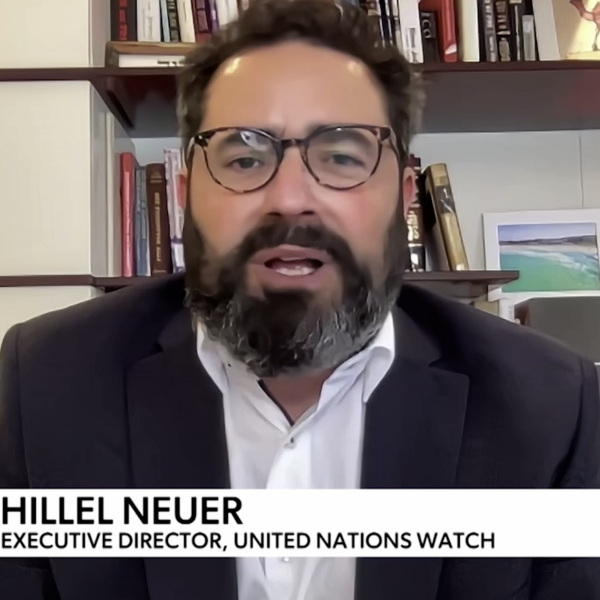
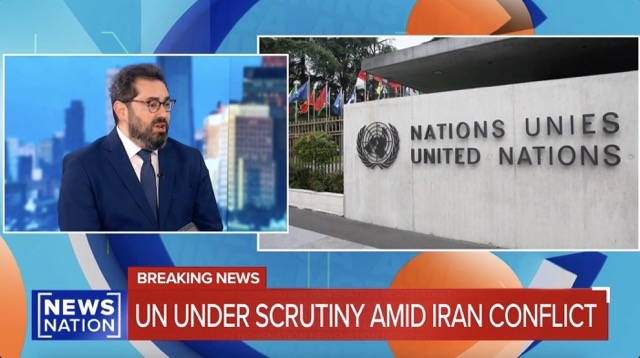
UN Watch Executive Director Hillel Neuer appeared on NewsNation’s Morning in America with host Hena Doba to discuss the ongoing conflict involving Iran, the reaction of the United Nations, and the implications for the Iranian people and the wider Middle East. During the interview, Neuer argued that while Iran’s actions have destabilized the region for decades, much of the UN system has focused its criticism on the United States and Israel.
Interview Transcript:
Hena Doba: Here with us now is Hillel Neuer, Executive Director of the human rights group UN Watch. Well, I’m so thrilled to have you. Thanks for coming on. I know you were in town from Geneva, so I appreciate it. As the conflict with Iran continues, we’ve heard criticism from many of our allies as well. What are you watching most closely in terms of how the United Nations is handling this global conflict?
Hillel Neuer: Look, the Gulf Arab states who have been hit enormously by Iran — the UAE, Bahrain, Qatar, and others. They got the Security Council to adopt a very strong resolution condemning Iranian aggression against them. China and Russia were afraid to veto it, so they abstained.
So that was one response from the UN — but that’s the exception. The rest of the UN agencies, led by Secretary-General António Guterres, have been condemning the U.S. and Israel very strongly, but have not been mentioning the decades of Iranian aggression against the United States.
The Iranian regime has the blood of hundreds of Americans on its hands. They’ve been chanting every day “Death to America,” “Death to Israel,” manufacturing missiles, pursuing an illicit nuclear weapon.
Meanwhile, UN agencies — UNESCO, UNICEF, UN Women — have been condemning the U.S. and Israel but haven’t been mentioning that Iran itself massacred tens of thousands of its own people just a few months ago.
Hena Doba: Absolutely. On the numbers, we had an adviser on for the exiled crown prince last week. He said the number of deaths in Iran could be close to 40,000 civilians. On Friday, Defense Secretary Pete Hegseth said this in response to the situation in Iran:
Secretary Pete Hegseth (by video recording): Our response: we will keep pressing. We will keep pushing. Keep advancing. No quarter, no mercy for our enemies.
Hena Doba: No mercy for our enemies. You are part of the UN system. From your perspective, what are the implications of rhetoric like this?
Hillel Neuer: Well, the question is: what is the threat of the Iranian regime? I’m in touch with Iranian activists on the ground — thousands of them who are writing every day. They want this regime gone. They see this regime as their enemy, as occupying their country. They have risen up heroically. The Iranian people are heroic. They rose up in the hundreds of thousands, if not millions. They were gunned down — tens of thousands of people.
So they want this regime neutralized. And the American people are facing a possibly nuclear-armed Iran — a regime that has attacked a dozen of its neighbors, kills its own people, and chants “Death to America.” So the threat needs to be neutralized.
Hena Doba: We’ve had a lot of military experts on in the last few days, and they say diplomacy is still crucial with our allies. How do you reach diplomacy when the Secretary of War is saying, “Hey, we’re not going to have any mercy on the Iranian people, or whoever gets in our way here”?
Hillel Neuer: Well, the Iranian people are the ones asking for this regime to be removed…
Hena Doba: The Iranian regime, excuse me, Iranian regime.
Hillel Neuer: ...so look, the threat has to be dismantled. There is a threat of aggression against the entire Middle East. Iran has had proxy terror networks — Hamas, the Houthis, Hezbollah — armed and funded by Iran, spreading terror across the region. They tried to kill my friend here in New York City, the journalist and activist Masih Alinejad. Several times tried to kidnap her and kill her. They’ve tried to kill American leaders here several times. So the threat has to be dismantled. There is room for diplomacy after the regime has been dismantled.
Hena Doba: On Friday, officials also talked about the bombing of a girls’ school in Iran. Let’s listen to that as well.
Secretary Pete Hegseth (by video recording): “All I can say is that we’re investigating that. We never target civilian targets, but we’re looking into investigating that.”
Hena Doba: Almost 175 people were killed in that attack — most of them children. With the technology that the U.S. and Israel have, how do we not yet know who was responsible for this bombing?
Hillel Neuer: There’s no independent verification yet of the casualties or anything else. It seems that a school was hit and that there were terrible casualties. It’s heartbreaking. It’s tragic. But let’s keep in mind: the United States has attacked approximately 6,000 targets. Secretary Hegseth is right that there is no evidence at all that the United States deliberately targeted civilians.
President Trump initially suggested the U.S. might have been responsible, and then said it was being investigated. Reports say it may well have been a U.S. strike. If so, that is tragic and heartbreaking. But the U.S. has conducted about 6,000 strikes, and they distinguish between civilians and the regime. They’re trying to hit the regime. Accidents happen. It has to be fully investigated. They’ve appointed an independent expert outside CENTCOM to investigate.
But to claim that this is a war crime because civilians were deliberately targeted is false. The Iranian regime deliberately attacks civilians. You just had reports that they’re attacking Israeli civilian centers with cluster munitions — which by definition spread over populated areas. That is deliberately attacking civilians. The United States is attacking the regime. Mistakes are tragic and need to be investigated.
Hena Doba: You and I were talking about the recent crackdowns that have killed thousands of people in Iran. You said you have friends on the ground there. Does this moment strengthen their opposition, or does the war make it harder for them to speak up?
Hillel Neuer: They’ve been pleading with the international community: “help us remove this occupying regime. They’ve been terrorizing us for decades.”
Iran is the world capital of executions. They attack dissidents, journalists, human rights activists, and women who dare to demand their rights. So they are waiting for this regime to be weakened. Israeli strikes have also targeted the Basij — the oppressive machinery of death within the Iranian regime. They’re waiting for the moment to stand up and regain their freedom.
Hena Doba: You’ve spent years documenting human rights abuses by the Iranian regime. With the world’s attention now on Iran, do you believe there’s finally an opportunity for greater accountability?
Hillel Neuer: Yes indeed. This is a moment. We’re talking about 47 years of systematic repression. The regime has been condemned even by the UN General Assembly for attacking women who dare to demand their rights, attacking minorities — whether Azeris, Baloch, Kurds and others — religious minorities, journalists, and democracy activists. If this regime is weakened and dismantled, there will be a chance for real accountability.
Hena Doba: From your perspective, what would a real diplomatic path forward look like right now? Who needs to lead?
Hillel Neuer: First, the threat from the regime has to be dismantled — the missile threat, the nuclear threat, and the terrorizing of their own people. Once that happens, if new leadership emerges, there will be room for a diplomatic way out.
Hena Doba: Benjamin Netanyahu recently said he’s open to boots on the ground. Do you see that happening — from the U.S. military and the IDF?
Hillel Neuer: I think it’s more unlikely from the United States. There’s not a strong appetite for that in the U.S. But there may be elements of the nuclear program — uranium facilities buried under rubble or deep underground — that you can’t necessarily eliminate from the air.
The Israeli people are willing to do what’s necessary to remove this threat. They’ve been living under this sword for decades. Israelis have been in bomb shelters for the past two weeks, barely sleeping. Thousands have been injured.
But they want the threat of nuclear annihilation removed. Iran has threatened to destroy Israel while spending hundreds of billions pursuing nuclear weapons instead of helping its own people. So if you can remove that nuclear threat, it needs to be done.
Hena Doba: In the last few days we’ve seen several countries — including France and some Middle Eastern allies — calling for de-escalation and a return to diplomacy. President Trump said the strikes will continue. Do you think that will help diplomacy moving forward?
Hillel Neuer: France has been talking about Lebanon, but the problem is that Hezbollah has effectively taken over Lebanon for decades. They are essentially run by Iran’s IRGC. The Iranian embassy in Beirut is effectively running the show — not in the interests of the Lebanese people, but in the interests of the Iranian regime.
Israel warned them not to attack, and they did anyway. The Lebanese people understand that Hezbollah has no interest in their welfare. They are a terror proxy of the Iranian regime. The path to diplomacy will come when the terror network afflicting the Middle East — run by Iran through Hezbollah, Hamas, and the Houthis — is dismantled.
Hena Doba: I really enjoyed our conversation. Hillel Neuer, thank you so much for coming on.
Hillel Neuer: Thank you for having me.