According to a report published today by the Swiss non-governmental organization UN Watch, the majority of UN human rights experts—known officially as Special Procedures—have been mostly silent on the Islamic Republic’s violent crackdown against civilian protests since December 28, 2025. This includes experts who routinely speak out on Israel and are quick to condemn the United States.
This report was also submitted to the Human Rights Council and published as an official document of the 39th special session of the Human Rights Council on the deteriorating human rights situation in the Islamic Republic of Iran. See A/HRC/S-39/NGO/1.
Background to the protests
On December 28, 2025, large-scale protests erupted across Iran, reflecting longstanding demands of the Iranian people for fundamental rights, dignity, and accountability. The immediate trigger for the protests was currency inflation, which caused a sharp spike in prices of basic goods, particularly food items. Other contributing factors are poverty and ethnic inequality.
While women’s rights were not the primary catalyst for these protests, freedom and equality for Iranian women—including opposition to compulsory hijab—remain critical issues. Women protesters demonstrated defiance of the regime’s strict social rules by burning portraits of the ayatollah and smoking cigarettes. Two weeks earlier, on December 12, regime forces had violently arrested Iranian Nobel laureate and women’s human rights activist Narges Mohammadi and placed her, along with other activists, in solitary confinement.
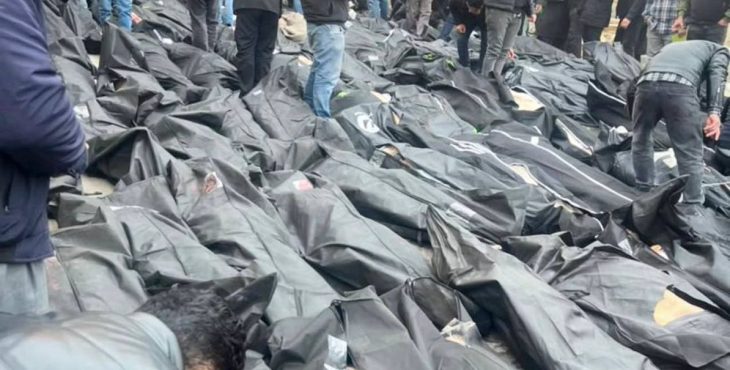
The regime’s response has been marked by extreme and unlawful violence, including mass arrests, unfair trials, forced confessions, and executions. As part of the crackdown, the regime cut internet and phone service on the night of January 8, 2026. As of January 13, 2026, credible reports estimated that at least 12,000 protesters had been killed since the demonstrations began, with many more injured, arbitrarily detained, or forcibly disappeared. Bodies have been piling up in makeshift morgues. By January 19, 2026, the reports were of 16,500 killed.
Below is an analysis of the response of the UN’s human rights experts to the Islamic Republic’s violent crackdown on Iranian protesters.
Analysis
Out of 87 Special Procedures, only seven issued or endorsed an official statement condemning the regime’s crackdown. Published on January 13, 2026—two and half weeks into the violence—the statement was signed by the experts on Iran, extrajudicial executions, freedom of expression, freedom of assembly, torture, international solidarity, and Afghanistan. Notably, when this statement was first published, it was signed by only five UN experts. Some time after, two more experts joined. Other than this one official statement, there have been only a handful of social media posts on X—an extremely weak response given the scale, intensity, and barbarity of the government response.
This silence results from selective and politicized engagement by UN human rights experts who routinely mobilize on issues unrelated to their mandates. For example, on August 28, 2025, 47 Special Procedures—including country mandate-holders and experts on migration, food, and displacement—co-signed a statement titled Reaffirming the Centrality of Gender as a Tool for Advancing Equality and All Human Rights, despite having no mandate-based connection to gender equality. This readiness to issue broad ideological statements stands in stark contrast to their near silence in the face of the Iranian regime’s mass killing of protesters.
In contrast to the ongoing violations in Iran, UN experts have repeatedly mobilized with remarkable speed to condemn the United States and Israel. On January 7, 2026—just four days after U.S. forces arrested Nicolas Maduro—19 UN experts signed an official statement “strongly condemning” the move. Similarly, on June 5, 2020, less than two weeks after the police killing of George Floyd in Minnesota, 27 UN experts co-signed a statement calling on the U.S. government to “address systemic racism in the criminal justice system.”
The same pattern is evident with respect to Israel. On September 19, 2024, within two days of Israel’s targeted pager attack on Hezbollah operatives in Lebanon, 22 UN experts jointly condemned Israel for what they described as “terrifying” violations of international law. Similarly, on May 29, 2024, just two days after an Israeli strike targeting Hamas sparked a fire in nearby civilian tents, 52 UN experts demanded “decisive international action to end the bloodshed in Gaza.”
These statements also reveal the extent to which UN experts routinely overreach their mandates when addressing Israel. For example, on October 3, 2025, 28 UN experts—including the Special Rapporteurs on human rights in Eritrea and Somalia—co-signed a statement criticizing the Trump peace plan for Gaza, despite having no mandate-related connection to Middle East peace negotiations. Similarly, in response to October 7, a joint statement condemning both Hamas and Israel, was issued by 50 Special Procedures, including mandate-holders on climate change, albinism, and unrelated country situations such as Cambodia, Eritrea, and Iran.
Seven UN Experts That Signed or Endorsed January 13, 2026 Statement on Iran
Mai Sato, Special Rapporteur on the situation of human rights in the Islamic Republic of Iran
- January 2, 2026: Six days into the protests, Sato commented for the first time on her X account, calling on the authorities to “respect the rights to freedom of expression, association and peaceful assembly, and refrain from using excessive force against peaceful protesters.”
- January 13, 2026: Signed joint UN Statement titled Experts urge Iran to break cycle of violence, create space for dialogue.
- January 13, 2026: Shared her UN statement on X.
- January 14, 2026: Shared and endorsed tweet by Special Rapporteur on freedom of assembly Gina Romero—“I echo the strong objection of the Special Rapporteur on the rights to freedom of peaceful assembly and of association concerning the scheduled use of the death penalty to crack down on demonstrations.”
Morris Tidball-Binz, Special Rapporteur on extrajudicial, summary or arbitrary executions
- January 13, 2026: Signed joint UN Statement titled Experts urge Iran to break cycle of violence, create space for dialogue.
- No social media posts.
Irene Khan, Special Rapporteur on the promotion and protection of the right to freedom of opinion and expression
- January 13, 2026: Signed joint UN Statement titled Experts urge Iran to break cycle of violence, create space for dialogue.
- No social media posts.
Gina Romero, Special rapporteur on the rights to freedom of peaceful assembly and of association
- January 2, 2026: Tweeted calling to “respect of lifes and integrity of protestors and the right to assemble.”
- January 12, 2026: Tweeted praise and sympathy for the protesters.
- January 13, 2026: Signed joint UN Statement titled Experts urge Iran to break cycle of violence, create space for dialogue.
- January 14, 2026: Tweeted urging Iranian authorities to stop threatening the death penalty against Erfan Soltani
Richard Bennet, Special Rapporteur on the situation of human rights in Afghanistan
- January 13, 2026: Signed joint UN Statement titled Experts urge Iran to break cycle of violence, create space for dialogue.
- No social media posts.
Alice Jill Edwards, SR on torture and other cruel, inhuman or degrading treatment or punishment
- January 13, 2026: Signed joint UN Statement titled Experts urge Iran to break cycle of violence, create space for dialogue.
- No social media posts (X Account is private)
Cecelia M. Bailliet, Independent expert on human rights and international solidarity
- January 13, 2026: Signed joint UN Statement titled Experts urge Iran to break cycle of violence, create space for dialogue.
- No social media posts (No X Account)
Other UN Experts That Should Have Spoken Out
Mary Lawlor, Special Rapporteur on the situation of human rights defenders
- January 15, 2026: Shared a post by another organization about the protests, adding “shocking reports” about violations against human rights defenders coming from Iran.
Margaret Satterthwaite, Special Rapporteur on the independence of judges and lawyers
- Retweeted January 13, 2026 tweet by Mai Sato sharing her UN statement.
- January 16, 2026: Posted a short thread recalling the right to defense and a fair trial and stating that she is following the situation closely.
Matthew Gillett, Working Group on arbitrary detention
- Silent (No X Account)
Miriam Estrada-Castillo, Working Group on arbitrary detention
- Silent (X Account inactive)
Mumba Malila, Working Group on arbitrary detention
- Silent (No X Account)
Aue Balde, Working Group on enforced or involuntary disappearances
- Silent (Working Group X Account also silent)
Gabrielle Citroni, Working Group on enforced or involuntary disappearances
- Silent (No X Account; Working Group X Account silent)
Grażyna Baranowska, Working Group on enforced or involuntary disappearances
- Silent (X Account is deactivated; Working Group X Account silent)
Ana Lorena Delgadillo, Working Group on enforced or involuntary disappearances
- Silent (Working Group X Account also silent)
Mohammed Al-Obaidi, Working Group on enforced or involuntary disappearances
- Silent (Working Group X Account also silent)
Reem Alsalem, Special Rapporteur on violence against women and girls, its causes and consequences
- Silent
Claudia Flores, Working Group on discrimination against women and girls
- Silent (No X Account; Working Group X Account silent)
Ivana Krstić, Working Group on discrimination against women and girls
- Silent (No X Account; Working Group X Account silent)
Dorothy Estrada-Tanck, Working Group on discrimination against women and girls
- Silent
Haina Lu, Working Group on discrimination against women and girls
- Silent (No X Account; Working Group X Account silent)
Laura Nyirinkindi, Working Group on discrimination against women and girls
- Silent (No X Account; Working Group X Account silent)
K.P. Ashwini, Special rapporteur on contemporary forms of racism, racial discrimination, xenophobia and related intolerance
- Silent
Olivier de Schutter, Special rapporteur on extreme poverty and human rights
- Silent (X Account is inactive)
Michael Fakhri, Special Rapporteur on the right to food
- Silent (X Account is inactive)
Tlaleng Mofokeng, Special Rapporteur on the right to health
- Silent
Balakrishnan Rajagopal, Special rapporteur on the right to adequate housing
- Silent
Pedro Arrojo-Agudo, Special Rapporteur on the human rights to safe drinking water and sanitation
- Silent
Farida Shaheed, Special Rapporteur on the right to education
- Silent