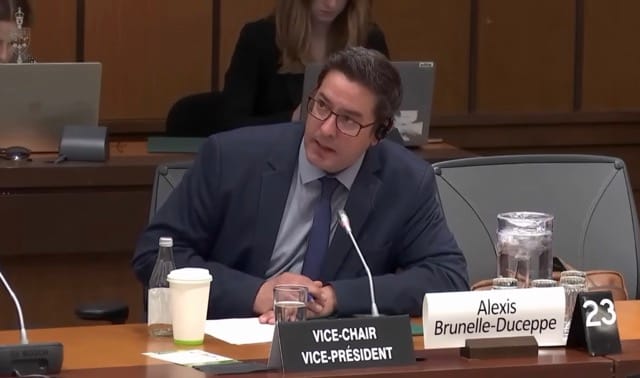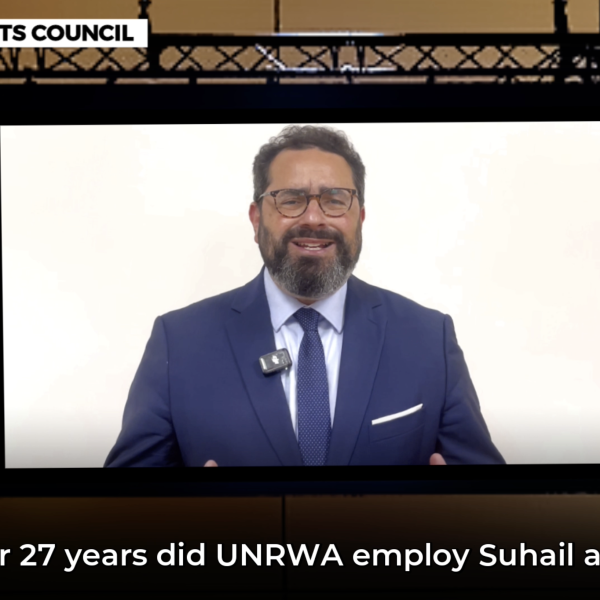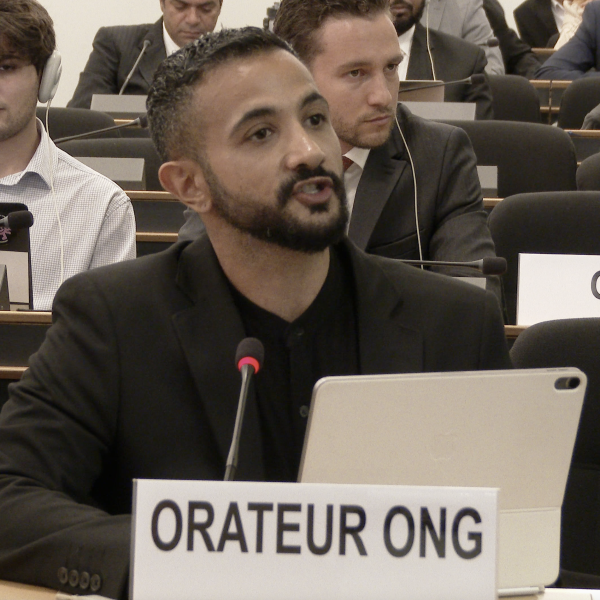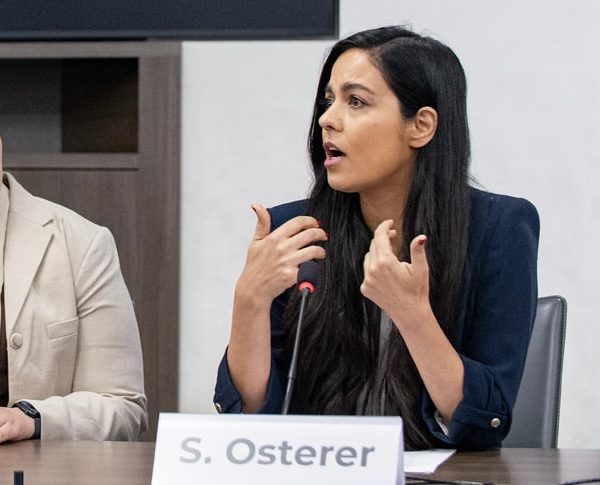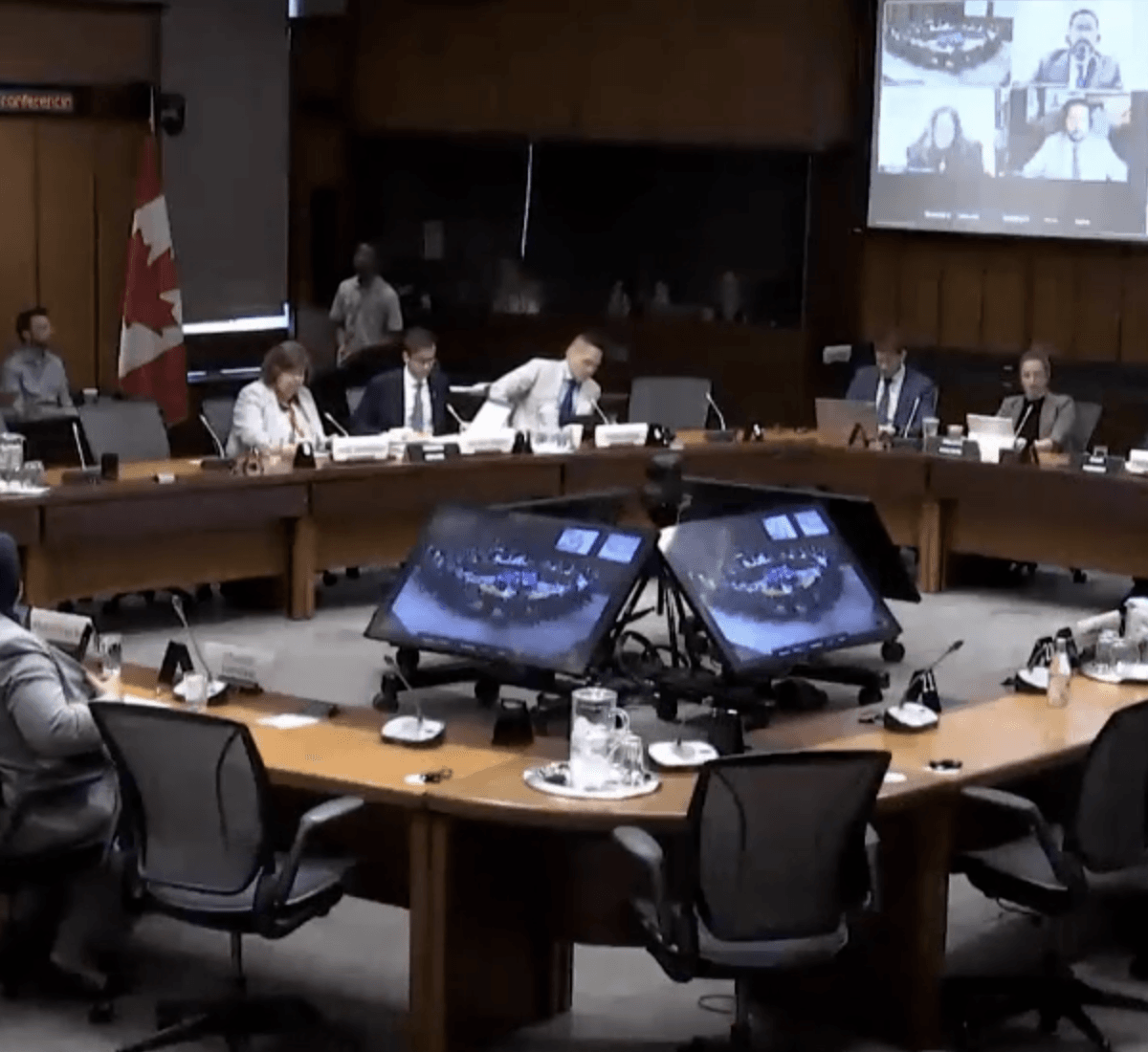

On April 27, 2026, UN Watch Executive Director Hillel Neuer addressed the Canadian Parliament’s subcommittee on human rights, setting the record straight on Ottawa’s nomination of Iran to a key UN body, UNRWA’s ties to terrorism, and on the most urgent reforms needed at the United Nations.
Testimony Highlights
MP Anita Vandenbeld: I do want to reassure members of the Committee and those watching that Canada does not support Iran for positions of influence in the United Nations.
Hillel Neuer: We heard from an honorable member that Canada does not support Iran in leadership positions. But actually Canada did support. Canada did join consensus on April 8th to nominate Iran. Canada could have spoken out.
There the Chair asked “Does anyone want to speak out?” The United States took the floor. The United States took the floor and said ”This is a shameful thing to do.” And Canada chose silence. As a Canadian, this is something that caused me a great shame.
Neuer Fact-Checks Liberal MP at 🇨🇦 Parliament:
MP Anita Vandenbeld: “Canada does not support Iran for positions of influence at the U.N.”
Hillel Neuer: “Actually, Canada did support Iran—on April 8th, Canada helped to nominate Iran. It could have spoken out, yet chose silence.” pic.twitter.com/YJv1Sf6A0o
— UN Watch (@UNWatch) May 4, 2026
_____________
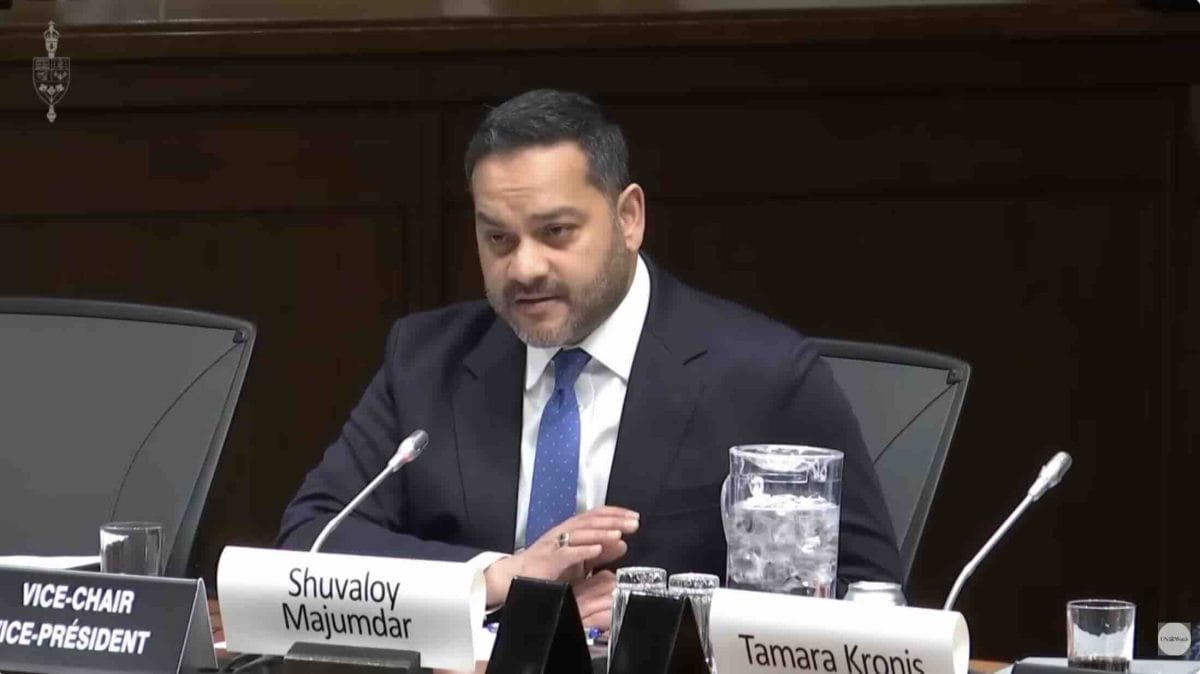
MP Shuvaloy Majumdar: Hillel, as you know, the Canadian government had joined consensus to nominate the Iranian regime to a UN body that shapes policy on issues like women’s rights, human rights, counter-terrorism. May I ask you for your perspectives on that particular issue?
Hillel Neuer: On April 8th, at a meeting of the United Nations Economic and Social Council, Canada — as well as other democracies, including France, Germany, the UK, Finland, Australia, Norway, Austria, and the Netherlands — joined consensus to nominate the Islamic Republic of Iran to the UN Committee for Program and Coordination, which is meeting soon: One day on women’s rights, one day on human rights, one day on peacekeeping, one day on terrorism prevention.
The notion that the Islamic Republic of Iran, which has just massacred some 40,000 protesters in two days, would be nominated to a committee that decides priorities for the United Nations on these critical issues is an insult to the memory of the tens of thousands of individuals who were killed that day, and it is an act of contempt for the people of Iran.
MP Shuvaloy Majumdar: Hillel, the Government has said that UNRWA supports values of human rights and peace. Meanwhile, the United States, Sweden, and the Netherlands have all cut or ended their funding to UNRWA for complicity with terrorism. UN Watch has been documenting problems with this organization for well over a decade, with numerous reports. What have you found in recent times?
Hillel Neuer: For a decade, we have been sounding the alarm that there are hundreds of UNRWA teachers, based in Gaza, Jordan, Lebanon, and elsewhere, who are funded by Canada and who are actively promoting terrorism — celebrating the killing of Jews, glorifying Nazi Germany and Adolf Hitler, and praising Hamas attacks.
And, honorable members, it is actually much worse than that. In the past year or two, we revealed that the heads of UNRWA’s education system — the very system that the Canadian government says it is funding to educate Palestinians in the values of peace and human rights — are not just supporters of Hamas, but Hamas terror chiefs.
These are the heads of the system. It is not a few bad apples — it is rotten to the core. An agency that should be helping Palestinians is instead poisoning them, with leaders of Hamas terrorism heading their education system. Canada cannot pretend it does not know. It does. UN Watch has documented a network of more than 400 UNRWA teachers and employees connected to Hamas — either supporting it, leading it, or praising terrorism. If we truly want to help Palestinians, we should not be poisoning the minds of another generation by funding terrorism.
MP Shuvaloy Majumdar: Hillel, if you were the Secretary-General of the United Nations, what would you do to fix this institutional and operational set of problems plaguing the organization?
Hillel Neuer: If I were UN Secretary-General, the main priority would be to restore moral clarity and credibility. If the United Nations cannot tell the difference between victims and their oppressors, it loses the very reason it exists. The UN’s greatest asset is its legitimacy — and it is eroding. We need to end the culture of false equivalence.
To say that the world’s largest dictatorship is the same as a liberal democracy is wrong. And when mass atrocities occur, the United Nations has to stop being silent. Too many countries get a free pass because they are powerful or have powerful alliances.
Second, we have to stop empowering abusers inside the system. If the UN allows China, Cuba, and Qatar to sit on the UN Human Rights Council, it is wrong. Authoritarian regimes should not be chairing human rights bodies or shaping global norms.
Finally, we have to refocus the UN on victims — not politics. Too often, the system amplifies regimes and sidelines dissidents. We should be systematically prioritizing giving the floor to dissidents — the kind we bring to our Geneva Summit: political prisoners, human rights defenders, victims of oppression, whether from the Islamic Republic of Iran, China, Zimbabwe, Venezuela, Pakistan, or Cuba. Give them the floor—not the regimes.