INTRODUCTION
This document responds to the latest version of UNRWA’s Facts Versus Claims, published in September 2025. UNRWA portrays itself as the victim of “misinformation and disinformation campaigns.” In fact, UNRWA is a primary source of both, deliberately misleading donors to continue funding a corrupt, terror-compromised agency. UNRWA’s claims are misleading, its oversight ineffective, and the UN investigations it cites are structurally biased. These systemic failures enable terror infiltration, undermine neutrality, and mislead donor states.
UNRWA’s strategy is consistent: deflect responsibility wherever possible.
A central theme in UNRWA’s publication is the assertion that Israeli government allegations are “unsubstantiated.” UNRWA appears to argue that unless Israel provides its classified intelligence files on UNRWA employees’ terror affiliations directly to UNRWA, the allegations must be dismissed. This position is unreasonable and unserious. No state is expected to expose sources, methods, or classified intelligence that could compromise national security. Moreover, Israel did submit classified material to the UN for the OIOS investigation, and portions of it have since become public. Israel’s intelligence has repeatedly proven reliable. UNRWA’s insistence on receiving raw files directly is therefore nothing more than a pretext.
UNRWA also claims that it has no independent duty to investigate allegations of employee involvement with terror groups or neutrality violations in its facilities, suggesting it must rely entirely on Member States — primarily Israel — to supply evidence. This is false. Like any employer, UNRWA is fully responsible for what takes place in its facilities and for ensuring it does not employ terror operatives. It has both the authority and the obligation to perform rigorous background checks and ongoing screening of its staff. UNRWA’s duty to maintain neutrality gives it an obligation beyond that of ordinary employers. It must actively investigate and prevent any terror-support or terrorist activity among its staff or within its facilities.
Equally unreasonable is the notion that Israel should have initiated criminal proceedings against suspects located in Gaza — individuals over whom it has neither custody nor control — while UNRWA, their employer, does.
UNRWA further cites two UN investigations — both structured to exonerate the agency — as proof of its innocence.
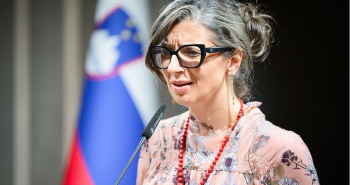
The first, the OIOS investigation, was initiated on January 26, 2024 after Israel alleged that 12 UNRWA employees participated in the October 7 atrocities. Even before the investigation concluded, a March 4, 2024 memo circulated by UNRWA-aligned lobbyists under Francesca Albanese’s Global Network on the Question of Palestine instructed advocates to pre-emptively declare that the OIOS report “will not substantiate Israeli claims.” The memo emphasized that the messaging should not come directly from UNRWA to preserve the appearance of independence.
OIOS published its findings on August 5, 2024. Predictably, it stated that it had not received hard evidence. Yet the report admitted that the evidence “could indicate” that nine staff members “may have been involved in the 7 October attacks.” The investigation was opaque: employees were unnamed, allegations unspecified, and evidence undisclosed. It dismissed Israeli intelligence even though parts of it are now public. Israel received only a heavily redacted version — so redacted that the credibility of OIOS’s conclusions cannot be meaningfully assessed. The UN likewise refused to supply the U.S. Congress with an unredacted version. This severe lack of transparency undermines the legitimacy of the entire process.
UNRWA also cites the Colonna Review, claiming it “confirmed” that the agency has adequate neutrality mechanisms, that it has “systems in place” to handle allegations, and that between 2022 and 2024 it reviewed all external complaints and launched investigations when evidence was present. Policies alone are meaningless if not enforced. UNRWA’s admission that it reviewed only external allegations — without internal investigations despite systemic problems — reveals a profound lack of commitment to neutrality.
Moreover, the Colonna Review was compromised from the start. Former UNRWA spokesman Chris Gunness, speaking on behalf of UNRWA, told an outlet sympathetic to the UN that he hoped the report would provide donors with “cover” to resume funding. UN spokesperson Stéphane Dujarric acknowledged that Secretary-General Guterres intended the review to “reassure” donors who had doubts, and Colonna herself described the mission as one designed to restore donor “confidence.” These statements make clear the review’s purpose was political, designed to reassure donors, not to investigate.
A detailed analysis by UN Watch further shows that Catherine Colonna and the three research institutions involved in the review were not impartial. They had either conflicts of interest or a documented history of positions sympathetic to UNRWA and/or hostile to Israel.
The following sections examine UNRWA’s claims one by one, using public evidence and UNRWA’s own admissions to demonstrate that its narrative cannot withstand scrutiny.
UNRWA’s Claim 1: Allegations are not Evidence: UNRWA has not received evidence that 1,400 UNRWA employees have links to Hamas and Palestinian Islamic Jihad
Analysis: In April 2025, the Israeli government revealed that more than 1,400 UNRWA Gaza employees — approximately 12% of its workforce — were members of Hamas and Palestinian Islamic Jihad. The finding was based on verified Israeli intelligence obtained during military operations in Gaza, some of which was declassified and made publicly available online. The released documents included Hamas’s own personnel records: internal recruitment databases, military training rosters, and administrative files. These were cross-referenced with UNRWA’s official staff lists that the agency had previously provided to Israel.
UNRWA has completely dismissed this intelligence, asserting that it has not received from Israel or any other UN Member State any “information” or “evidence” supporting the allegation. But whether Israel handed the evidence directly to UNRWA or released it publicly is irrelevant. The evidence exists in the public record, and UNRWA has a duty to act upon it.
UNRWA further argues that because it conducts “detailed reference checks” on its staff and has been sharing employee names and employee numbers with Israel for two decades, it bears no responsibility for failing to detect staff with terror-group affiliations. However, these “reference checks” rely on the UN’s “Consolidated Sanctions List,” which does not include Hamas or Palestinian Islamic Jihad. The Colonna Report acknowledged that “these measures do not allow sufficient verifications.” Moreover, although UNRWA has long shared employee names with Israel, it only provided the list in a fully digital format with ID numbers (as opposed to UNRWA employee numbers) in March 2024 — allowing Israel, for the first time, to cross-check its data against other intelligence databases.
Despite UNRWA’s attempts to deflect the charge that at least 12% of its Gaza staff belong to Hamas and PIJ, its own leadership has previously acknowledged that Hamas members are on its payroll — and has stated openly that it “does not see that as a crime.”
UNRWA’s Claim 2: There is no evidence to support the claim that UNRWA has been “totally infiltrated” by Hamas
Analysis: UNRWA seeks to discredit UN Watch’s research by claiming that over the past two years “less than one percent” of the agency’s 30,000 employees were found to have violated neutrality — and that most of those cases involved nothing more than “inappropriate” social media posts. This characterization is misleading and ignores the core issue. The concern is not a handful of social media violations — it is the systemic penetration of UNRWA by Hamas and Palestinian Islamic Jihad.
Publicly available evidence compiled by UN Watch demonstrates that Hamas’s infiltration of UNRWA is deep, longstanding, and institutional. In January 2025, UN Watch released The Unholy Alliance: UNRWA, Hamas, and Islamic Jihad, documenting how senior UNRWA officials — both local and international — regularly meet with Hamas and Islamic Jihad leaders, publicly praise one another for “cooperation,” and describe each other as “partners.” Terror groups are able to exert influence over UNRWA operations, including by pressuring the agency to reverse or modify decisions.
In September 2025, UN Watch published Schools in the Grip of Terror: How UNRWA Allowed Hamas Chiefs to Control its Education System, showing that Hamas leadership had gained control of UNRWA’s education system in both Gaza and Lebanon through direct leadership roles and domination of UNRWA staff unions. The report highlighted two emblematic cases:
- Suhail Al-Hindi — Simultaneously a Hamas politburo member, an UNRWA school principal, and head of the UNRWA Gaza Staff Union for years. He has since emerged as a senior Hamas figure involved in ceasefire negotiations and regularly appears alongside Hamas leadership abroad.
- Fateh Sharif — A Hamas leader in Lebanon who served as an UNRWA school principal and head of the UNRWA Lebanon Teachers’ Union for years. After he was killed in an Israeli strike on September 30, 2024, Hamas publicly mourned him as its commander in Lebanon.
The report further showed that the successors to both men in UNRWA’s unions were also Hamas operatives who continued promoting Hamas’s agenda within UNRWA structures.
Even UNRWA’s own commissioned review — the Colonna Report — acknowledged the problem. It explicitly found that UNRWA’s staff unions are “politicized” and that political factions have long used these unions to pressure agency leadership and influence service delivery and project implementation. It concluded that the politicization of staff unions is “one of the most sensitive neutrality issues” facing UNRWA and requires urgent attention. Moreover, UNRWA’s own August 2025 assessment confirmed that, more than a year on, every recommendation concerning politicized unions remained unimplemented.
Against this backdrop, UNRWA’s insistence that the issue is limited to “less than one percent” of staff posting improper material on social media is indefensible. This framing appears aimed more at discrediting UN Watch than at addressing the underlying problem. UN Watch has consistently explained that its social media findings represent only a fraction of neutrality breaches, due to limited access to employee rosters and privacy settings on Facebook. UNRWA itself has even coached staff on how to hide their social media profiles to avoid being caught violating neutrality. A genuine, comprehensive investigation into online and offline activities would almost certainly uncover a far higher rate of violations.
UNRWA’s refusal to engage with the evidence — and its choice to minimize it — underscores that the agency is not serious about confronting the scale of Hamas infiltration within its ranks.
UNRWA’s Claim 3: UNRWA’s engagement with Hamas takes places solely at the “operational level” with the “exclusive purpose” of “delivering humanitarian aid and services”
Analysis: UNRWA insists that its dealings with Hamas — euphemistically referred to as “the de facto authorities” — are purely “operational” and limited to facilitating humanitarian aid. It cites coordination with both Israel and Hamas during the conflict since October 7, 2023, and points to occasional clashes with Hamas since 2007 as evidence that its interactions are narrow and transactional. Yet even on its own terms, the mere fact that UNRWA maintains any coordination with Hamas — a terrorist organization that governs Gaza through coercion and violence — is profoundly problematic and undermines its claims of neutrality.
This narrative is false. UNRWA’s response disregards the agency’s longstanding and extensive ties to Hamas — ties that go far beyond operational coordination during the October 7th conflict. UN Watch’s The Unholy Alliance: UNRWA, Hamas, Islamic Jihad shows that UNRWA’s dealings with Hamas go far beyond the “operational level,” shaping major areas such as education policy, employee hiring, and financial assistance.
The evidence of deeper collaboration is overwhelming. A sophisticated Hamas intelligence data center was discovered beneath UNRWA’s Gaza headquarters, with cables directly connected to UNRWA’s electrical system — proof that UNRWA infrastructure supported Hamas operations for years. According to IDF Col. Elad Shushan, weapons were found in every UNRWA site inspected. The IDF has produced visual evidence of Hamas launching attacks from inside or adjacent to UNRWA schools, storing weapons in those schools, and constructing terror tunnels beneath UNRWA facilities. All of this is a matter of public record.
While UNRWA’s international staff may occasionally clash with Hamas, these confrontations frequently end with UNRWA capitulating to Hamas demands — reinstating teachers suspended for neutrality violations, allowing Hamas influence over hiring decisions, and blocking curriculum reforms on Holocaust education and gender equality.
UNRWA’s Claim 4: UNRWA had not received “specific allegations” of aid diversion by Hamas or other armed groups
Analysis: UNRWA’s central defense is that Israeli claims of Hamas aid diversion “have not yet been substantiated let alone proven.” To support this, UNRWA cites a February 2024 statement by U.S. Special Envoy David Satterfield that Israeli officials had not raised these allegations in confidential briefings. UNRWA then argues that the charges are merely a “pretext” to justify sidelining the agency in favor of the Israeli-supported Gaza Humanitarian Foundation.
But the “no evidence” claim is categorically false. In March 2025, former hostage Eli Sharabi provided first-hand testimony before the UN Security Council describing Hamas’s systematic theft of humanitarian aid. In April 2025, during Israel’s freeze on new aid into Gaza, the Wall Street Journal detailed how Hamas had long profited from humanitarian aid — using the revenue to pay its fighters — and how the freeze was choking off this crucial funding stream. The IDF has also released extensive digital evidence, including audio and video recordings of Hamas operatives stealing aid, all of which has been widely reported in the media.
Further, during the 4.5 months in which the Gaza Humanitarian Foundation delivered nearly 200 million meals to needy Gazans without diversion, the UN itself acknowledged that close to 90% of its own aid was being “intercepted,” some of it “forcefully by armed actors.” With respect to UNRWA specifically, an UNRWA employee tweeted early in the war that Hamas had stolen UNRWA fuel — a tweet UNRWA immediately deleted and denied, even though other sources confirmed the theft. There is also abundant evidence of UNRWA aid appearing in Hamas custody: UNRWA aid bags found in Yahya Sinwar’s hideout and UNRWA bags used to conceal weapons in multiple sites across Gaza.
UNRWA also claims to have “a robust system of oversight and checks.” In reality, this system merely screens vendors and subcontractors against the UN Security Council Sanctions List — which, as noted, does not include Hamas — and verifies beneficiaries against UNRWA’s own registry. None of these checks prevent Hamas or other armed groups from simply stealing the aid once it enters Gaza.
UNRWA’s Claim 5: UNRWA systematically condemns violations of UN premises
Analysis: Although Hamas is the party in Gaza that stores weapons in, fires from, and digs tunnels beneath UNRWA facilities, UNRWA begins its defense by insisting that “both sides” have “violated the neutrality of UNRWA sites.” This framing alone obscures the reality of who is responsible for the overwhelming majority of violations.
UNRWA’s response repeatedly deflects responsibility for Hamas’s routine abuses of its premises, despite being the custodian of those facilities and having a duty to know what occurs on its grounds. Outrageously, UNRWA declares that it “is not responsible for anything that may or may not lie under its premises,” even though Gaza’s vast subterranean terror-tunnel network runs directly beneath its schools, clinics, and headquarters. The sophisticated Hamas data center discovered directly under UNRWA’s Gaza City HQ had electrical cables running straight into the UNRWA offices themselves — incontrovertible evidence that UNRWA knew, or should have known, what was happening below.
Moreover, UNRWA employs 13,000 staff in Gaza. Even assuming none of them were Hamas members or related to Hamas operatives, they lived and worked amid massive tunneling activity. Building more than 350 miles of tunnels with 5,700 access shafts required heavy machinery, thousands of workers, and constant noise. It is simply not credible that UNRWA staff were unaware. Indeed, in November 2021, UNRWA’s former Gaza Director Matthias Schmale acknowledged the obvious: “Many people told me through my four years, there’s tunnels everywhere and it’s a safe assumption.”
UNRWA further defends itself by claiming it “systematically condemned” such violations and notified the “de facto authorities” — meaning Hamas itself — whenever it discovered weapons or tunnels under its premises. But when the violations are recurring, widespread, and perpetrated by the very authority you are “notifying,” public condemnations are meaningless. UNRWA has an affirmative duty to prevent these abuses, not merely to report them to the perpetrators.
UNRWA’s so-called “regular neutrality assessments” are similarly hollow. They amount to:
- Checking that facilities are not being “misused,” without explaining how;
- Ensuring UN buildings are clearly marked;
- Posting signs declaring the premises weapons-free; and
- Removing political graffiti.
According to the Colonna Report, these inspections were intended to occur quarterly, yet they “did not always occur on schedule” and were chronically understaffed. The problems they typically identified — missing UN signboards, no-weapons signs, or UN flags — only confirm how superficial these assessments were. They failed to detect any Hamas activity in or around UNRWA facilities, despite extensive evidence that such activity was widespread. The report concluded that quarterly inspections are wholly inadequate to “ensure the neutrality of the premises,” and that “daily monitoring of the installations needs to be more robust.”
UNRWA’s Claim 6: UNRWA follows “best practices” for refugee education by using host government textbooks
Analysis: UNRWA defends its practice of using host-country textbooks and insists it has “no tolerance for hate speech and inciting discrimination or violence.” It asserts that its teachers are trained to address problematic material and that UNRWA supplements the curriculum with “UN positions” on the conflict. It also points to its human-rights and tolerance programs and boasts that its students achieve “among the best” academic outcomes in the region at minimal cost.
None of this addresses the core problem. High test scores do not excuse the poisonous content to which students are exposed. Since 2019, the European Parliament has passed annual resolutions condemning the Palestinian Authority for including incitement and hatred in its textbooks. Even the Georg Eckhart Study cited by UNRWA — which controversially claimed PA textbooks met UNESCO standards — acknowledged that these books contain antisemitism, glorify violence, and deny Israel’s existence. UNRWA conveniently omits the substantial criticism the study received for drawing conclusions that contradicted its own evidence. Yet these very textbooks are what UNRWA distributes in the West Bank and Gaza, ensuring that Palestinian children absorb the full range of hateful and violent messaging they contain.
UNRWA claims it trains teachers to “address” problematic content, but it does not claim — nor is there evidence — that teachers are instructed to stop teaching that content. UNRWA says educators “are required to follow this approach” and are “held accountable,” but provides no explanation of what accountability means in practice. Even the Colonna Report, which was sympathetic to UNRWA, conceded that UNRWA teaching materials contain serious problems: “the presence of even a small fraction of problematic content in textbooks, supplemental material and teaching content remains a serious issue.”
UN Watch’s Joint report with IMPACT-se (March 2023) documented actual UNRWA classroom instruction in which students were taught to glorify terrorists like Dalal Mughrabi as national “heroes.” The report also revealed numerous UNRWA lessons urging students to engage in violence to “liberate Palestine,” demonizing Israel and Israelis, teaching that sovereign Israeli territory rightfully belongs to Palestinians, and promoting antisemitic narratives. This directly contradicts UNRWA’s assertion that it teaches only UN-approved positions on the conflict.
If UNRWA students receive education on “human rights” and “conflict resolution,” it clearly excludes the Israel–Palestinian conflict — the very area where such instruction is most needed.
UNRWA’s Claim 7: A 2019 U.S. Government Accountability Office report reaffirmed UNRWA’s “unwavering commitment to UN Values”
Analysis: UNRWA cites the June 2019 U.S. Government Accountability Office (GAO) report, which found that although UNRWA had developed supplementary materials to counter problematic content, it had not trained teachers or distributed those materials — in part due to “staff refusal to attend trainings.” UN Watch’s 2023 report further demonstrated that, in practice, UNRWA teachers continued to teach the very problematic content these materials were meant to correct. In addition, our Schools in the Grip of Terror report further shows that Hamas-controlled unions frequently protested UNRWA neutrality measures — including neutrality trainings and curriculum changes such as adding Holocaust education — making these policies difficult or even impossible to implement.
UNRWA also points to its February 2019 statement responding to GAO’s criticism of its “teacher-centered approach.” But this response addresses policy on paper, not what is actually happening in UNRWA classrooms. Critically, UNRWA has never answered GAO’s finding that its own teachers refused to participate in required trainings.
UNRWA Claim 8: UNRWA’s Mandate is not to resolve the Palestine refugee issue
Analysis: UNRWA rejects the charge that it perpetuates the Palestinian refugee problem by maintaining millions of Palestinians as permanent refugees and telling them that their true home lies inside Israel. The agency insists that it is not mandated to resolve refugee status, only to provide “direct relief and works programmes.”
In reality, this limitation is precisely what transforms UNRWA from a humanitarian organization into a political one. Palestinians view the agency’s continued existence as their “right” until they “return to Palestine,” and UNRWA reinforces this perception. UNRWA’s own website states that the agency was established “to provide assistance pending the implementation” of UN General Assembly Resolution 194, which UNRWA claims “enshrin[es]” the right of return. That “right of return” refers to the demand that several million Palestinians — descendants of the 1948 refugees who have been living for generations in Gaza, Jordan, Lebanon, and Syria — be allowed to “return” en masse to what is now Israel, a goal that would effectively eliminate Israel as a Jewish state. By tying its mission directly to Resolution 194 while refusing alternatives such as resettlement or integration, UNRWA signals that “return” — the same ideological demand at the core of Hamas’s platform — is the only outcome it recognizes.
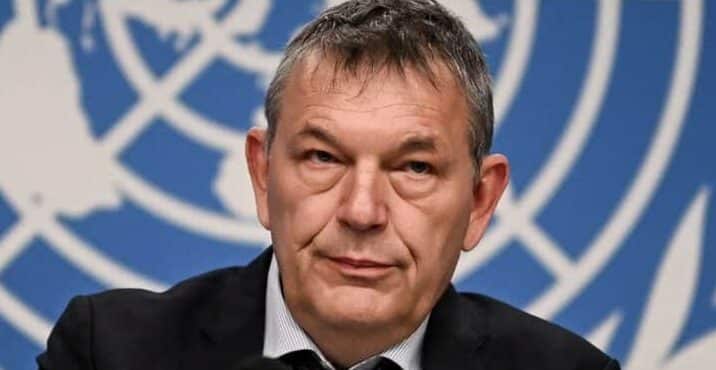
UNRWA officials consistently frame their mission in these political terms. When Israel’s Knesset voted in October 2024 to ban UNRWA, Commissioner-General Philippe Lazzarini denounced the move as an attack on Palestinians’ “refugee status” and “right of return.” His predecessor, Pierre Krähenbühl, declared that UNRWA is “not only a service provider” but “the witness of the injustice” of 1948 — a grievance he promised to “defend.” Likewise, UNRWA’s West Bank Director, Adam Bouloukos, admitted that the agency is “never able to de-link service provision from the right of return.” These statements underscore that UNRWA’s leadership views the agency not simply as a humanitarian actor but as the guardian of a political demand that ensures the conflict endures.
The fact that the General Assembly continues to renew UNRWA’s mandate — fully aware that the agency promotes a political narrative that obstructs peace and entrenches the conflict — does not absolve UNRWA or its leadership. Rather, it highlights how deeply the agency’s operations now align with, and ultimately advance, the agenda of terrorist organizations that depend on perpetuating the refugee issue indefinitely.
Against this backdrop, UNRWA’s claim that it follows UNHCR’s approach to refugee status is blatantly false. UNRWA asserts that it treats refugee descendants just as UNHCR does. In reality, UNHCR may allow refugee status to extend to children only in specific, protracted situations, and never automatically as it is under UNRWA. More importantly, under UNHCR norms, individuals who acquire new citizenship — such as most of the 2.4 million Palestinians in Jordan — cease to be refugees. And people who never left their territory and are fully settled there — including over 2.5 million Palestinians in the West Bank and Gaza — are not considered refugees under any other definition. UNRWA’s unique, expansive definition is what enables the perpetual growth of the “refugee” population for political purposes.
UNRWA Claim 9: UNRWA is irreplaceable because it provides “critical public services” through its 30,000 employees, most of whom are local Palestinians
Analysis: UNRWA argues that its model of employing local Palestinians — at salaries 40–70% lower than other locally recruited UN staff — makes it the most cost-efficient UN agency for delivering “public-like services,” such as education and health care.
But this claim sidesteps the more fundamental issue: why is the UN providing government services to Palestinians in the first place, something it does for no other refugee population? If the Palestinian authorities were responsible for these sectors, as any government would be, they could deliver them at the same cost or less. UNRWA’s lower-cost model does not make it indispensable; it merely means its staff could be absorbed into local government payrolls. Worse, by allowing the UN to shoulder basic state functions, UNRWA effectively relieves local authorities of responsibility. In Gaza, this enables Hamas to divert resources away from education and healthcare and toward tunnels, weapons, and other terrorist infrastructure.
Humanitarian relief — the one area where international intervention is appropriate — can easily be handled by other UN agencies such as WHO, WFP, UNHCR, and UNICEF, all of which routinely perform these roles in crises around the world. Although UNRWA has a large presence in Gaza, most of its staff are teachers who are not involved in humanitarian operations, whereas the specialized agencies possess broader experience and global infrastructure for scaling emergency aid.
Indeed, when asked in February 2024 whether agencies like WHO could expand their operations to replace UNRWA’s functions, WHO spokesman Christian Lindmeier said he had “no doubt” they could do so, “whatever needs to be done.” Yet the UN Secretary-General has effectively shut down such contingency planning, warning other UN agencies not to take actions that could “erode” UNRWA.
UNRWA’s Claim 10: UNHCR cannot replace UNRWA because the two entities have “very distinct functions”
Analysis: UNRWA points to the 1951 Refugee Convention, which established UNHCR’s mandate, noting that it “does not apply to those refugees who benefit from the protection or assistance of a United Nations agency other than UNHCR, such as refugees from Palestine who fall under the auspices of the United Nations Relief and Works Agency for Palestine Refugees in the Near East (UNRWA).”
But this distinction exists only because UNRWA exists. If Palestinians were to stop receiving UNRWA services, UNHCR’s mandate would automatically extend to them. For more than 70 years, the mere existence of UNRWA has blocked Palestinians from accessing UNHCR’s protections, producing the unusual situation in which Palestinians fleeing abuses by their own governments — whether Hamas in Gaza or the Palestinian Authority in the West Bank — are ineligible for UNHCR status.
While UNRWA’s mandate includes government-like services that UNHCR does not provide, this does not justify its role. These public services should be the responsibility of the host governments, not of UNRWA or any UN agency.
UNRWA’s Claim 11: It’s better for donors to help Palestinians through UNRWA then through other governments in the region
Analysis: UNRWA reiterates that it runs “essential public services” at costs comparable to “local civil services where they work.”
But this does not answer the fundamental question: why should donors channel aid to Palestinians through UNRWA rather than through local authorities or host governments? Relying on UNRWA bypasses these governments, relieving them of responsibility for essential services and perpetuating dependency. In Gaza, for example, this allows Hamas to divert resources away from education and healthcare toward tunnels, weapons, and other terrorist infrastructure. Donors’ assumption that UNRWA is inherently the best vehicle for aid ignores these consequences and entrenches a politically charged system rather than addressing Palestinians’ needs through legitimate, accountable governance.
UNRWA’s Claim 12: UNRWA launches investigations into “credible allegations” showing that it does take reports against it seriously
Analysis: UNRWA asserts that it has “no tolerance for hate speech, discrimination, or incitement to violence” and regularly reviews “all allegations it receives on breaching UN values and humanitarian principles,” investigating “credible allegations” and imposing disciplinary measures when violations are confirmed.
But this reactive approach is insufficient. If UNRWA were genuinely committed to neutrality, it would proactively investigate its staff rather than waiting for external complaints. It would also engage constructively with organizations like UN Watch instead of dismissing or disparaging critical reporting. UNRWA’s track record undermines its claim: for example, it has employed known Hamas leaders, including Suhail Al-Hindi and Fateh Sharif, as senior educators, demonstrating a repeated tolerance for individuals directly affiliated with terrorist activity.
Claim 13: The list of 100 names provided by the Israeli government to UNRWA in July 2024 is unsubstantiated and is being used to undermine UNRWA’s work
Analysis: In July 2024, the Israeli government provided UNRWA with a list of 100 Hamas operatives employed by the agency, including full names, government ID numbers, and Hamas military ID numbers. UNRWA dismissed the list as “unsubstantiated” and part of a “wider disinformation campaign against UNRWA,” despite the clear and verifiable nature of the information.
UNRWA now attempts to discredit the list by noting it had been submitting employee rosters to Israel for “two decades” without reaction. Yet prior to March 2024, lists were not digitized and lacked full names and ID numbers, making cross-checking impossible. By contrast, Israel’s July 2024 list was compiled using comprehensive intelligence gathered during operations in Gaza after October 7, 2023 — intelligence UNRWA chose to ignore.
UNRWA’s refusal to act on credible intelligence directly undermines the agency’s claims of neutrality and its credibility.
UNRWA’s Claim 14: The accusation that an UNRWA social worker kidnapped an Israeli into Gaza on October 7th is merely an “allegation” not “evidence”
Analysis: UNRWA categorically denies that any of its employees took part in the October 7th atrocities, asserting that “there has never been evidence provided to substantiate allegations of such horrific actions by anyone from UNRWA.” Yet its own statement inexplicably references the case of UNRWA social worker Faisal Na’ami, who was captured on film abducting Israeli Nova festival attendee Yonatan Samerano from Kibbutz Be’eri and transporting him into Gaza. The IDF recovered Samerano’s body in Gaza on June 22, 2025.
On August 5, 2025, the UN announced it had completed its investigation into 19 UNRWA employees accused by Israel of participating in the attacks. It dismissed nine of them, stating that “the evidence obtained by OIOS indicated that the UNRWA staff members may have been involved in the 7 October attacks.” The hedging — “may have been involved” — implies that the findings were not definitive. Compounding this ambiguity, the investigation was not transparent: it did not name the employees, specify the allegations, or disclose the evidence examined.
Israel maintains that it submitted substantial evidence of staff involvement to OIOS. Yet the version of the OIOS report provided to Israel was so extensively redacted that it is impossible to assess the credibility of its conclusions. Israel has since released some of its evidence publicly. In Na’ami’s case, this includes CCTV footage, Hamas membership records, vehicle registration data confirming that the car used in the abduction was registered in his name, and corroborating phone data.
Separately, USAID’s Office of Inspector General independently identified evidence connecting three current or former UNRWA employees to the October 7th attacks and found that 14 others were members of Hamas. Because of OIOS’s sweeping redactions, USAID OIG could not determine whether these individuals were among those investigated or dismissed. The UN has since refused to provide the U.S. House Committee on Oversight and Government Reform with any additional information, despite repeated formal requests.
Far from supporting UNRWA’s insistence that “no evidence” exists, the record shows that credible evidence was provided — but the UN chose not to meaningfully engage with it, opting instead to shield UNRWA through opaque procedures and heavily redacted findings that functioned less as an investigation than as institutional self-exoneration.
UNRWA’s Claim 15: No other agency can provide basic services at scale in Gaza
Analysis: UNRWA asserts that it is the only international agency capable of delivering “basic services” such as education to Gaza’s 660,000 children, as it did before the war. But this argument ignores a fundamental point: education for Palestinian children should be the responsibility of the Palestinian government — just as education is provided by national authorities everywhere else in the world. Since virtually all UNRWA teachers are local hires, they can be transferred to the Palestinian Authority’s payroll without disruption, making UNRWA’s claim of irreplaceability highly misleading.
UNRWA further warns that prolonged school closures increase the risk of exploitation, including “recruitment by armed groups.” Yet extensive research by UN Watch demonstrates that UNRWA’s own educational system has long functioned as an incubator for Hamas, employing Hamas members in senior educational positions, promoting the “right of return” as an ideological imperative, and glorifying martyrdom and jihad as pathways to “liberating Palestine.”
Far from serving as a barrier against radicalization, UNRWA’s school system has repeatedly amplified the very extremist narratives it claims to guard against.
UNRWA’s Claim 16: UNRWA calls for independent investigation into claims that hostages were held in UNRWA facilities
Analysis: UNRWA refuses to credit the firsthand testimony of returned Israeli hostages Emily Damari and Ditza Heiman, who stated that they were held in UNRWA facilities and by UNRWA personnel. Rather than acknowledge or investigate these accounts, UNRWA deflects responsibility by claiming it cannot verify information “from media and open source reports only,” urging those with evidence to “pass it on formally to UNRWA,” and calling for an independent investigation. This response reflects a familiar pattern: when confronted with direct testimony or concrete allegations implicating its staff, UNRWA routinely retreats into procedural evasions instead of undertaking substantive inquiry.
UNRWA’s position is also implausible on its face. The agency controls the facilities, employs the personnel, and maintains the operational records relevant to the hostages’ testimony. Moreover, UNRWA has repeatedly boasted that it operates all the shelters in Gaza. If it wished to verify these accounts, UNRWA could launch internal reviews, interview staff responsible for the sites in question and examine operational data. Yet it has chosen not to take even these minimal investigative steps. Its demand for an “independent investigation” functions primarily as a delay tactic — a way to avoid immediate accountability while claiming it cannot comment pending some future process. Based on past experience, such “independent” inquiries are neither transparent nor impartial — producing predetermined findings that shield the organization rather than expose wrongdoing.
Far from demonstrating transparency, UNRWA’s refusal to engage with evidence available from within its own system underscores a deeper problem: the agency is unwilling — not unable — to determine whether its personnel were complicit in holding Israeli hostages.
Claim 17: UNRWA is not refusing to distribute aid, but is blocked by Israel from bringing in aid to Gaza
Analysis: UNRWA claims that it is unable to deliver aid in Gaza because Israel is blocking access. In reality, the evidence shows the opposite: Israel actively facilitated the entry of aid, while UNRWA repeatedly misrepresented both the situation and its own capacity to distribute assistance.
Between October 7, 2023, and the ceasefire on October 10, 2025, the IDF’s COGAT unit enabled the entry of over two million tons of aid into Gaza, roughly 80% of it food. Overall, UN agencies — including UNRWA — accounted for only 30-33% of aid deliveries, even after the Gaza Humanitarian Foundation began operations on May 19, 2025. COGAT consistently affirmed there were no limits on aid into Gaza, a fact acknowledged by the UN.
Despite these facts, UNRWA’s public statements painted a very different picture. UNRWA officials — including Commissioner-General Philippe Lazzarini — repeatedly claimed that UNRWA had 6,000 trucks of aid waiting to enter Gaza, falsely implying that Israel was obstructing aid. This was demonstrably false: UN admissions to COGAT in private meetings confirmed that the UN lacked the capacity to process more than 120 trucks per day, and on July 15, 2025, COGAT posted a photo showing thousands of pallets of aid sitting at the crossing, waiting for collection. By mid-August, UN agencies had increased their aid pickups more than tenfold, yet UNRWA spokesperson Juliette Touma continued to claim that Israeli restrictions were preventing the agency from delivering aid as UNRWA claimed it had done during the January 2025 ceasefire.
COGAT repeatedly refuted UNRWA’s statements, clarifying that none of the 25,200 trucks delivered during the January ceasefire came from UNRWA and condemning the 6,000-truck claim as a “blatant falsehood.” The record demonstrates a consistent pattern: Israel facilitated aid at scale, while UNRWA exaggerated and misrepresented its own operational limitations to shift blame.
While Israeli Knesset legislation passed in October 2024 restricted UNRWA’s contact with Israeli authorities, it did not prohibit UNRWA from bringing in or distributing aid. As COGAT indicated, any UNRWA aid could still reach Gaza if transported by other UN agencies. UNRWA’s complaints therefore ring hollow, especially considering that other UN agencies successfully brought in and distributed aid. Rather than deflecting responsibility onto Israel, UNRWA should have taken on practical steps to ensure aid reached those in need.